Aquatic life viewed through an antique brass underwater porthole

Identification · Behavior · Habitats · Encounters

Aquatic Life Profiles

Search a growing collection of aquatic-life profiles connecting identification, natural history, conservation, responsible encounters, destinations, aquariums, photographs, video, and the diving community.

Explore complete, database-backed profiles built from the Sand Tiger Shark model. Approved photographs display with their source, credit, and reuse license while open media positions remain clearly reserved.

Have an aquatic-life photograph, encounter, correction, or species suggestion? Share it with the community.

Back to Prelaunch

The Aquatic Life Directory

What would you like to encounter?

Search profiles by common or scientific name, animal group, habitat, region, conservation status, or connected diving experience.
A connected, evolving collection

Every published profile is loaded from the shared database with approved image rights, visible credit, and its complete natural history and encounter sections.

819 profiles foundShowing 1-12 of 819
A sand tiger shark swimming through blue water
Sharks & RaysCritically Endangered

Sand Tiger Shark

Carcharias taurus

Explore identification, hovering behavior, habitat, conservation, responsible encounters, North Carolina wreck-diving connections, aquariums, photographs, and video.

Coastal reefs, wrecks, bays, and outer shelfWestern Atlantic and worldwide warm-temperate waters
IdentificationBehaviorWreck EncountersDive BoatsAquariumsPhoto & Video
Explore the complete profile
Adelie penguin (Pygoscelis adeliae), licensed photograph

Photo: Julien Renoult / CC BY 4.0 / cropped · CC BY 4.0

Other Aquatic LifeLeast Concern (LC). Global assessment in the IUCN-linked GBIF record checked 29 October 2026; local populations and protections can differ.

Adelie penguin

Pygoscelis adeliae

Black head with a conspicuous white eye ring; short dark bill and white belly. Juvenile head patterns differ. It swims underwater to pursue prey and can travel substantial distances over ice.

Antarctic coastal seas, sea-ice margins and exposed rocky nesting ground.Around Antarctica and nearby islands.
IdentificationBehaviorHabitatEncountersConservationDestinations
Explore the complete profile
African fish eagle (Icthyophaga vocifer), licensed photograph

Photo: Dave Brown / CC0 · CC0 1.0

Other Aquatic LifeLeast Concern (LC). Global assessment in the IUCN-linked GBIF record checked 29 October 2026; local populations and protections can differ.

African fish eagle

Icthyophaga vocifer

Adult has a white head and chest, chestnut body and dark wings; yellow face and hooked bill. Often perches beside water. It watches water from a perch before swooping to take prey.

Large rivers, lakes and wetlands with suitable perches and nest trees.Sub-Saharan Africa.
IdentificationBehaviorHabitatEncountersConservationDestinations
Explore the complete profile
African hind (Cephalopholis taeniops), licensed photograph

Photo: Theo Modder / CC BY 3.0 · CC BY 3.0

Bony FishLeast Concern (LC). Global assessment in the IUCN-linked GBIF record checked 29 October 2026; local populations and protections can differ.

African hind

Cephalopholis taeniops

Orange-red grouper with small blue spots, blue lines below the eye, and a rounded tail. Forages around bottom structure and shelter.

Sandy and rocky coastal seabeds.Tropical eastern Atlantic and offshore islands.
IdentificationBehaviorHabitatEncountersConservationDestinations
Explore the complete profile
African penguin (Spheniscus demersus), licensed photograph

Photo: Diego Delso, delso.photo / CC BY-SA 4.0 · CC BY-SA 4.0

Other Aquatic LifeCritically Endangered (CR). Global assessment in the IUCN-linked GBIF record checked 29 October 2026; local populations and protections can differ.

African penguin

Spheniscus demersus

Black-and-white penguin with one black chest band, scattered belly spots, and a pink patch above each eye. It hunts fish underwater and returns to coastal colonies to breed.

Southern African coastal waters, with island and mainland nesting colonies.Namibia and South Africa.
IdentificationBehaviorHabitatEncountersConservationDestinations
Explore the complete profile
African Pompano (Alectis ciliaris) — photograph

Photo: Antonio Vukusich y Alejandra Cabellos / CC BY 4.0 · CC BY 4.0

Bony FishIUCN Least Concern; local abundance and fishery pressure vary.

African Pompano

Alectis ciliaris

African pompano are deep-bodied silvery jacks with an angular head and long trailing dorsal and anal-fin filaments in juveniles. Adults may cruise alone or in small groups around offshore wrecks such as Naeco.

Warm offshore reefs, wrecks, drop-offs, and open water near high-relief structure.Tropical and subtropical waters worldwide, including the western Atlantic and Gulf Stream-influenced North Carolina shelf.
IdentificationBehaviorHabitatEncountersConservationDestinations
Explore the complete profile
Alewife in its aquatic environment

Photo: U. S. Fish and Wildlife Service - Northeast Region / Wikimedia Commons · Public domain

Freshwater LifeEstablished nonnative in the upper Great Lakes; abundance fluctuates

Alewife

Alosa pseudoharengus

A small herring that became a major Great Lakes prey fish after entering the basin, reshaping food webs and supporting introduced salmon.

Open water, nearshore spawning areas, and connected tributariesGreat Lakes, Atlantic coastal drainages, and introduced inland waters
IdentificationBehaviorHabitatEncountersConservationDestinations
Explore the complete profile
Allard's anemonefish (Amphiprion allardi), licensed photograph

Photo: Fernando Losada Rodríguez / CC BY-SA 4.0 · CC BY-SA 4.0

Bony FishLeast Concern (LC). Global assessment in the IUCN-linked GBIF record checked 29 October 2026; local populations and protections can differ.

Allard's anemonefish

Amphiprion allardi

Dark brown body with two broad white bands, yellow-orange face and fins, and a pale tail. Partners stay associated with a suitable host anemone.

Host anemones in lagoons and on outer reefs.Western Indian Ocean from East Africa to nearby islands.
IdentificationBehaviorHabitatEncountersConservationDestinations
Explore the complete profile
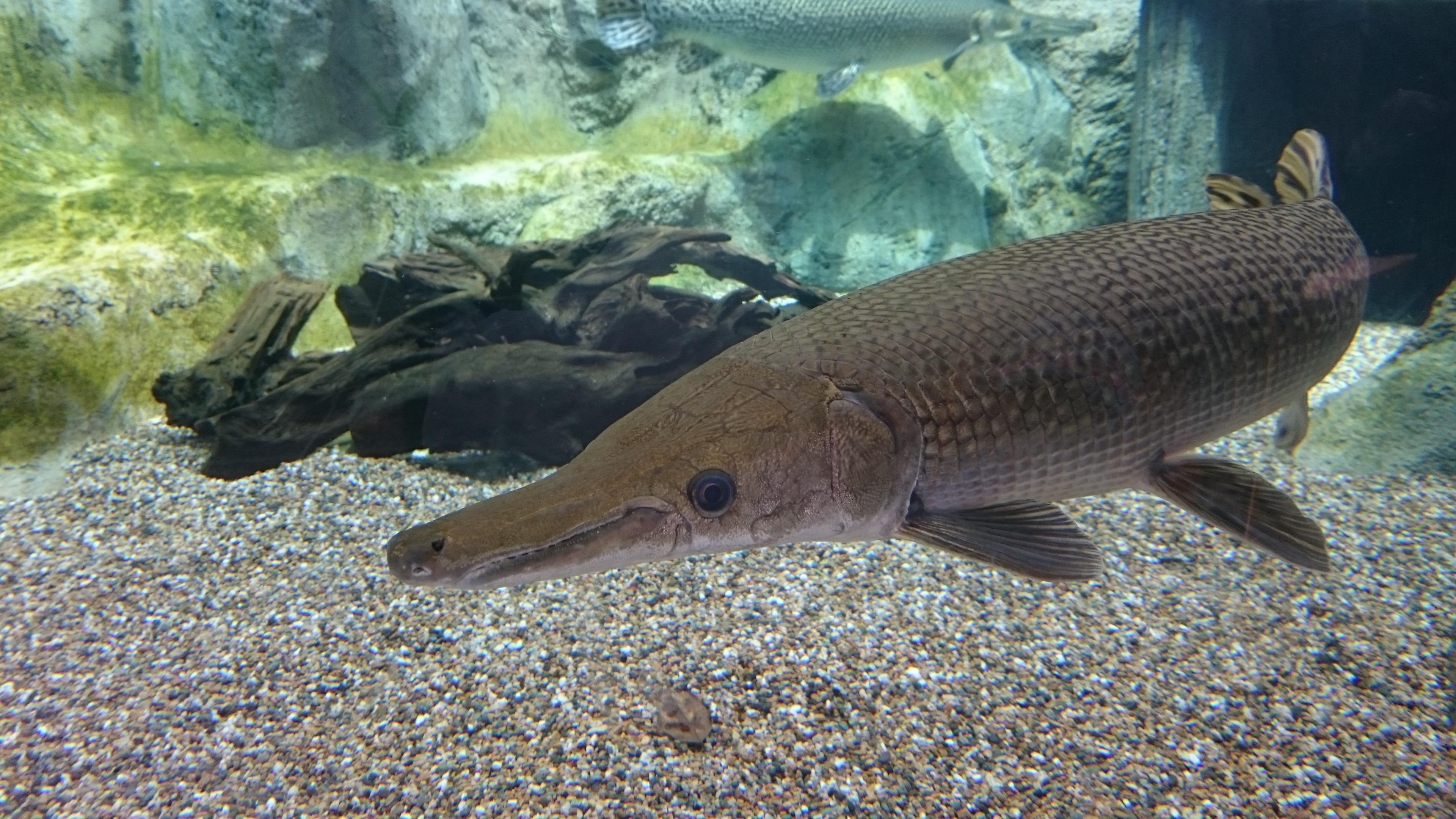
Alligator Gar shown in its aquatic environment

Photo: ProjectManhattan / Wikimedia Commons · CC BY-SA 4.0

Freshwater LifeLeast Concern globally; locally protected

Alligator Gar

Atractosteus spatula

One of North America's largest freshwater fishes, combining an alligator-like snout with heavy diamond-shaped scales.

Large rivers, bayous, floodplains, reservoirs, and brackish estuariesLower Mississippi basin and Gulf Coast
IdentificationBehaviorHabitatEncountersConservationDestinations
Explore the complete profile
Alligator Snapping Turtle (Macrochelys temminckii) — photograph

Photo: U.S. Fish and Wildlife Service Headquarters / Public domain · Public domain

Freshwater LifeConservation concern; proposed for U.S. Endangered Species Act threatened status in 2021, but not currently federally listed as threatened

Alligator Snapping Turtle

Macrochelys temminckii

The largest freshwater turtle in the United States, this heavily built ambush predator spends most of its life concealed on the bottom of deep, structured waterways. Three raised shell ridges, a massive hooked beak, and a worm-like tongue lure distinguish it from the more widespread common snapping turtle.

Large rivers, streams, canals, lakes, and swamps, especially deeper water with submerged logs, root masses, stumps, and forest canopyNative to Gulf-draining river systems of the U.S. Midwest, Southeast, and parts of the Southwest; current range documented in 12 states
IdentificationBehaviorHabitatEncountersConservationDestinations
Explore the complete profile
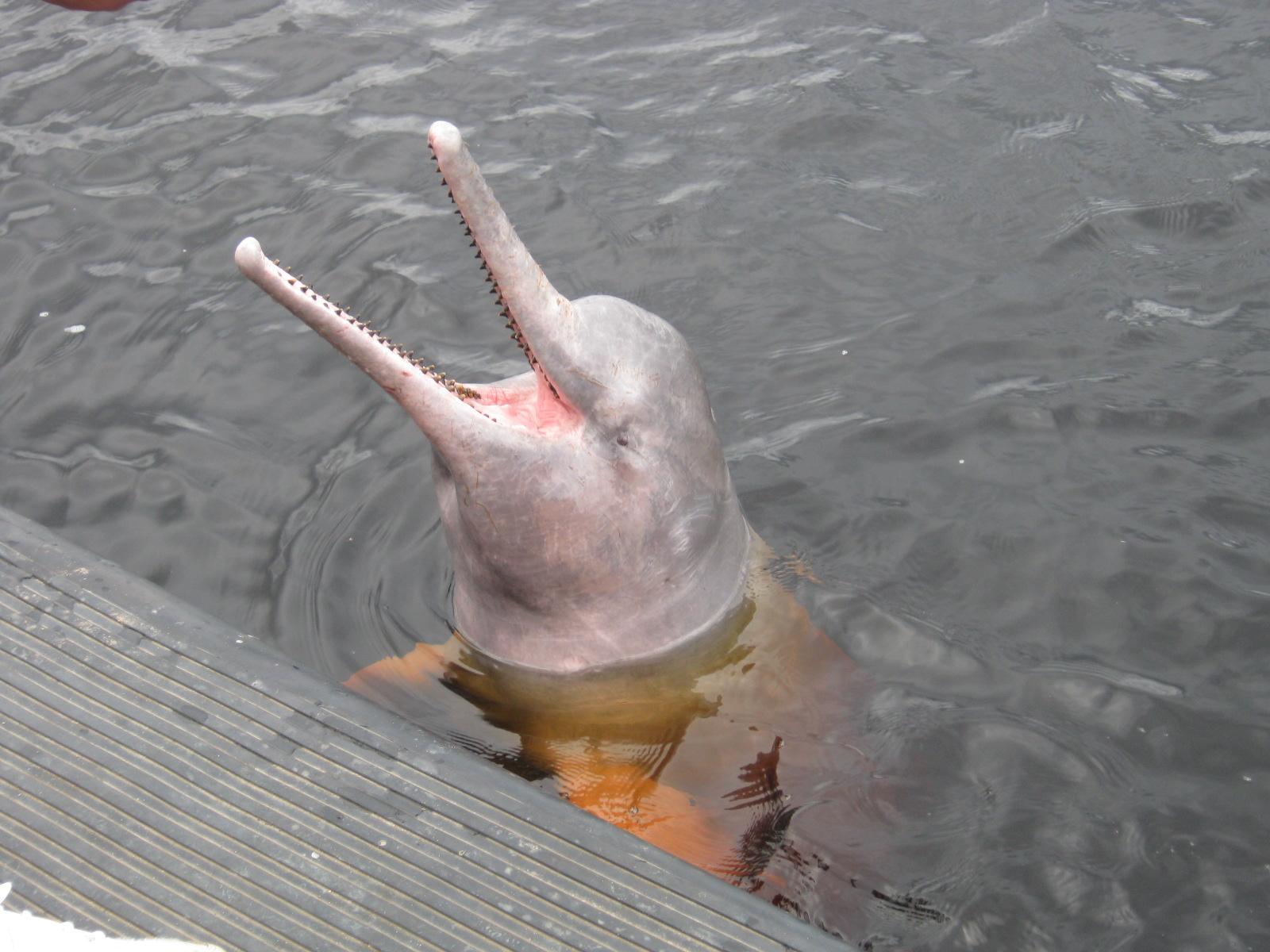
Amazon River Dolphin shown in its aquatic environment

Photo: Jorge Andrade / Wikimedia Commons · CC BY 2.0

Freshwater LifeEndangered globally

Amazon River Dolphin

Inia geoffrensis

A flexible-necked river dolphin, often pink in adults, adapted to maneuvering through seasonally flooded forest.

Main rivers, tributaries, floodplain lakes, and flooded forestAmazon and Orinoco basins
IdentificationBehaviorHabitatEncountersConservationDestinations
Explore the complete profile
Amazonian manatee (Trichechus inunguis), licensed photograph

Photo: Rosângela Souza / CC BY 4.0 · CC BY 4.0

Marine MammalsVulnerable (VU). Global assessment in the IUCN-linked GBIF record checked 29 October 2026; local populations and protections can differ.

Amazonian manatee

Trichechus inunguis

Large dark freshwater herbivore with a rounded paddle tail, flexible muzzle and flippers without nails; often a pale belly patch. Can feed during both daylight and darkness.

Vegetated Amazon lakes, oxbows, lagoons and connected freshwater habitat.Amazon basin.
IdentificationBehaviorHabitatEncountersConservationDestinations
Explore the complete profile