Future Artificial Reefs ·
Volusia County Seeks Contractor for 300-Ton Reef Deployments
A new county solicitation would establish offshore transport and placement capacity for clean reef materials across 18 permitted sites east of Florida’s Ponce Inlet.
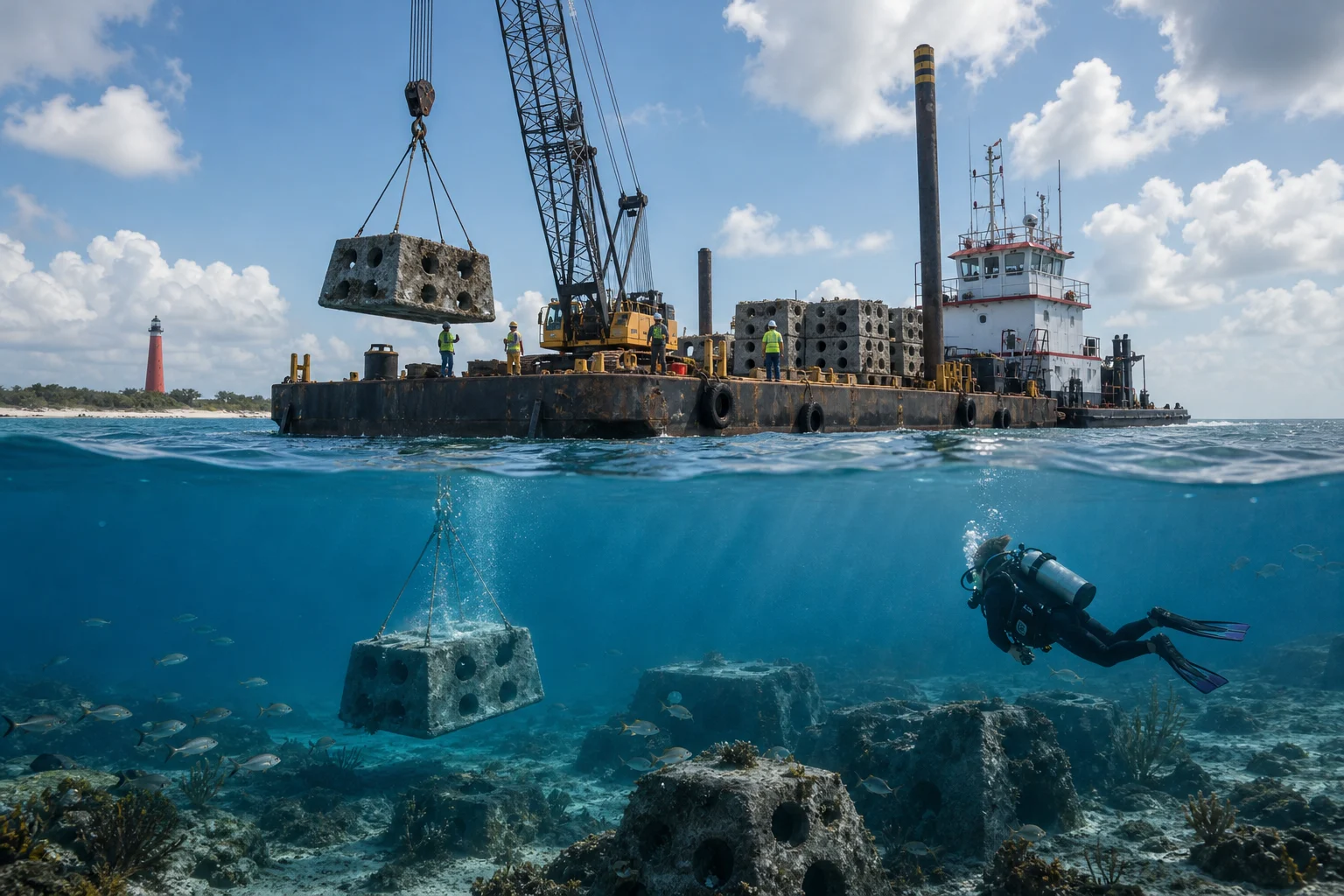
Volusia County, Florida, has opened bidding for a contractor to load, transport and deploy artificial-reef material throughout its offshore reef network. Invitation for Bid 26-B-127JS was released October 2, with responses due November 5, 2026.
The solicitation calls for a contractor to provide the vessels, equipment and personnel needed to move material from the county’s artificial-reef yard to offshore placement locations selected by the county reef coordinator. Pricing is requested per 300-ton load, and the specifications call for an American Bureau of Shipping-rated deck barge with at least 500 tons of capacity. Deployment would generally be required within 90 days after county notification unless a different schedule is negotiated.
Volusia County says its program includes 18 permitted reef sites and more than 150 existing reefs, located roughly one to 20 miles offshore of Ponce de Leon Inlet in water depths of approximately 50 to 120 feet. The procurement documents use a slightly broader operating description—more than 160 reefs, one to 33 miles offshore and depths from 50 to 130 feet—so those figures should be reconciled before publication.
Permitted materials can include clean concrete, culverts, bridge sections, heavy steel components, prefabricated modules and qualifying vessels, depending on the individual site permit. The current solicitation does not commit the county to a stated number of loads, identify the material ready for the next deployment or announce a specific reef-building date.
For divers, the contracting effort indicates continued investment in an established Atlantic artificial-reef system that already spans recreational and advanced depths. Any new placement could create future fish habitat and new survey or dive objectives, but it should not be added as a discrete dive site until the county publishes the deployment location, coordinates, material description, relief, clearance and as-built information.
Bids are evaluated on price, equipment, delivery capability and past performance. An award would establish deployment capacity; it would not by itself mean that a new reef has been installed. Divers should continue using the county’s current reef map and observe Florida’s 300-foot separation requirement around displayed divers-down flags.
Connected reporting
Dive sites and aquatic life in this story
Reporting record