Diving Conservation ·
Volunteer Divers Remove 2,433 Pounds of Debris From Upper Twin Lake
Clean Up the Lake completed 18 scuba dives along four miles of the California alpine lake’s shoreline, recovering nearly 5,000 submerged items from depths down to about 25 feet.
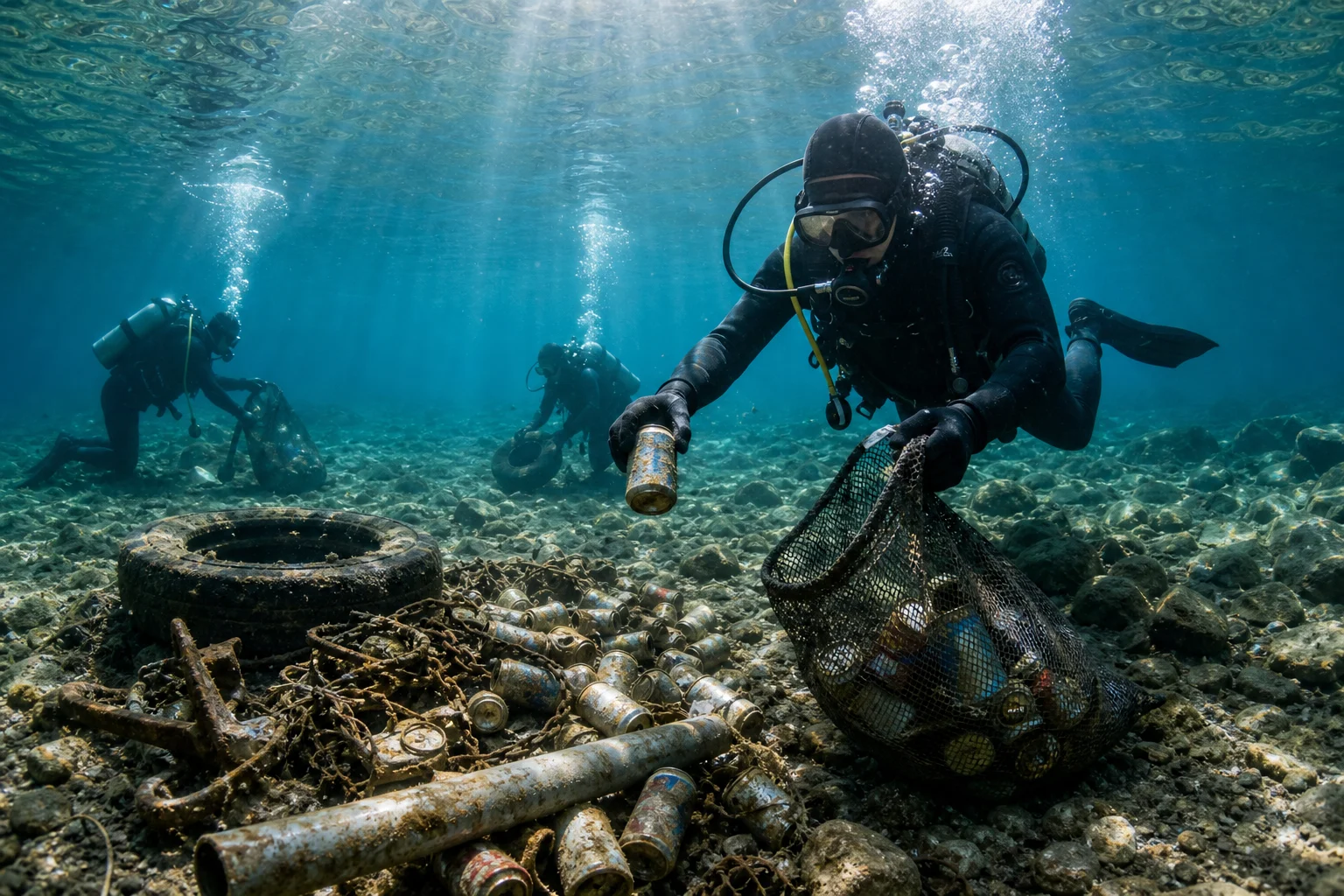
A volunteer scuba team has removed 2,433 pounds of submerged debris from Upper Twin Lake in California’s Eastern Sierra, documenting how years of recreation can leave a substantial footprint below otherwise scenic water.
The Tahoe-based nonprofit Clean Up the Lake carried out the five-day project in August 2026. Divers completed 18 dives around approximately four miles of shoreline and worked to depths of about 25 feet, using mesh bags to collect smaller items by hand. The organization reported recovering 4,999 individual pieces of debris.
The haul included 1,376 aluminum cans, 31 boat anchors, 24 tires, fishing line and tackle, and a six-foot metal pipe. Divers also found two .22-caliber handguns, which the organization said were turned over to local authorities. Some chained anchors and other cumbersome objects were classified as heavy-lift items rather than removed by individual divers during ordinary collection work.
Clean Up the Lake has surveyed or cleaned roughly 20 lakes in Northern California. Its executive director, Colin West, described Upper Twin Lake’s debris load as above average compared with the group’s other projects. A pilot dive at neighboring Lower Twin Lake recovered another 70 pounds and indicated that a future cleanup there could encounter a similar mix of discarded material.
The Upper Twin Lake operation was funded through the Mono County Fish and Game Fine Fund. Beyond the headline weight, its item-level accounting provides useful baseline information for future cleanup and prevention efforts. Fishing line, lost anchors and tires can create entanglement, navigation and habitat concerns, while cans and smaller litter accumulate in places that surface visitors may never see.
For divers, the project is also a practical example of task-focused freshwater diving. Debris recovery requires conservative depth and gas planning, careful buoyancy around fine sediment, surface coordination, appropriate lifting methods and clear procedures for sharp, heavy or potentially hazardous finds. Recreational divers should not handle weapons or attempt improvised heavy lifts; discoveries of that kind should be marked, reported and managed with the relevant authorities or trained recovery team.
Connected reporting
Dive sites and aquatic life in this story
Reporting record