Wrecks ·
UK Publishes Detailed Licensing Framework for Intrusive Titanic Exploration
New guidance explains when UK nationals and UK-flagged vessels need approval to enter the wreck, recover material or sample the protected site—and which non-intrusive surveys remain outside the licence requirement.
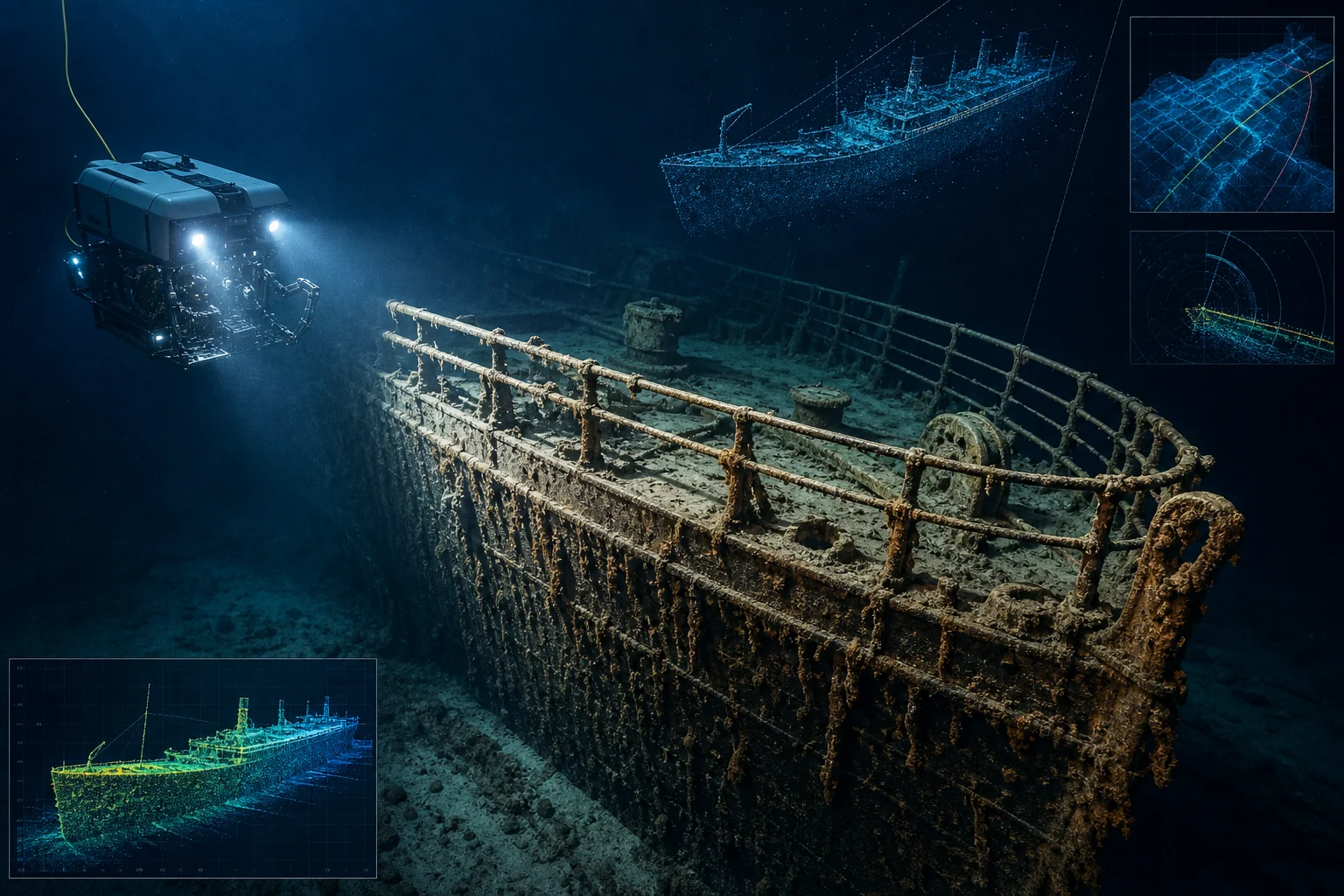
The United Kingdom has published detailed guidance for projects seeking to explore or investigate RMS Titanic, setting out a clearer path for work that could enter the hull, recover material, remove sediment or collect research samples.
The rules apply through the UK licensing system to UK nationals and UK-flagged vessels. The Department for Transport is the licensing authority, while Historic England provides independent archaeological and conservation advice. Applications are also circulated to the other parties to the international Titanic agreement—Canada, France and the United States—for review.
A licence is required for penetration of the wreck, recovery of artifacts from the wreck or its designated debris field, controlled sediment removal and research sampling. The government says permission to enter the hull or recover material would not normally be granted unless an applicant shows that the research cannot be completed non-intrusively and presents a strong educational, scientific or cultural justification.
The guidance draws an important line between intrusive and observational work. Geophysical survey, non-intrusive visits, photography, videography, visual monitoring, measured and photographic survey, site-plan preparation, seabed-topography recording and most ecological surveys do not require a UK licence under this process. Project organizers are nevertheless advised to ask the Department for Transport when the boundary is uncertain and to check every other law or authorization that may apply.
Applicants begin with an initial inquiry and, if invited to proceed, must submit a detailed project design at least 120 days before fieldwork. The design must cover research questions, methods, funding, team qualifications, conservation and curation, documentation, safety, archiving and publication. The framework specifically rejects artifact sales as a way to fund an expedition.
The operational expectations are equally significant for deep-ocean vehicles. Project methods should prevent dropped weights or other material from being deposited at the site, manage tethers to avoid entanglement and keep remotely operated or autonomous vehicles far enough from the seabed and wreck to prevent collision or disturbance. The guidance also asks applicants to address environmental impacts and demonstrate vessel and submersible safety.
For divers and underwater explorers, the larger lesson is that Titanic is not an unrestricted expedition target. Non-intrusive documentation remains possible under the UK framework, but penetration, recovery and sampling demand advance review, a defensible research purpose and long-term responsibility for data and any material. The wreck is both an archaeological site and a memorial, and responsible access begins with confirming the rules that apply to the people, vessel and activity involved.
Connected reporting
Dive sites and aquatic life in this story
Reporting record