Scientific Diving and Marine Conservation ·
Tokelau Expedition Combines Scuba, eDNA and Submersible Surveys
National Geographic Pristine Seas has begun a four-week baseline survey of Tokelau’s lagoons, outer reefs and deep water to support future ocean policy and marine spatial planning.
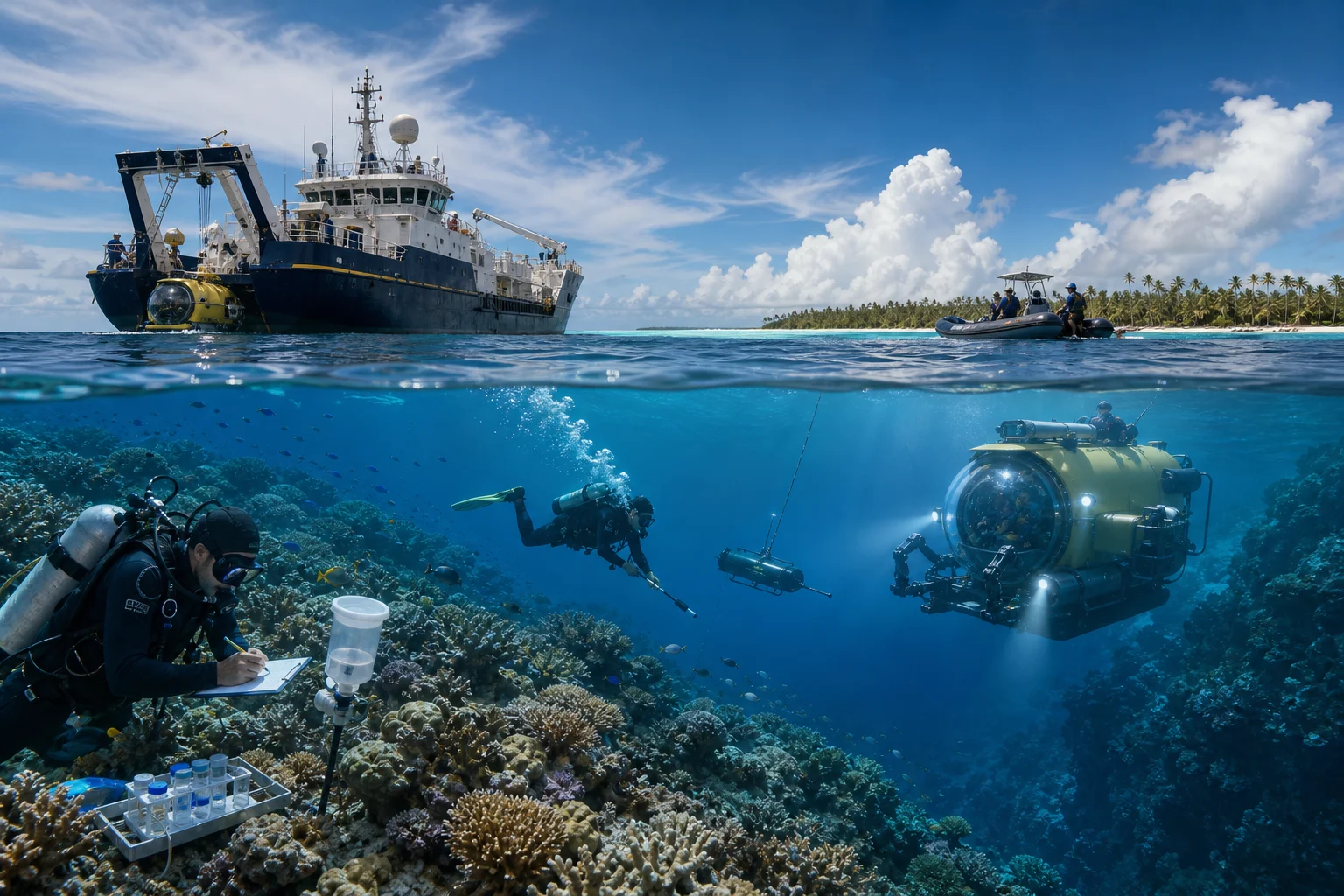
National Geographic Pristine Seas has begun a four-week expedition to document marine life across Tokelau, pairing scientific scuba diving with environmental-DNA sampling, remote video systems, deep-sea cameras and a crewed submersible.
The project was announced on September 19 and is being conducted at the invitation of Tokelau’s government in partnership with its Ministry of Climate, Ocean & Resilience. Researchers and filmmakers aboard the research vessel Argo are expected to work around all three of the territory’s coral atolls, building what organizers describe as the first comprehensive baseline spanning nearshore reefs, open ocean and deep-sea environments.
Tokelau’s scale makes that baseline unusually important. The three atolls have a combined land area of roughly 12 square kilometres, while the surrounding exclusive economic zone covers about 319,000 square kilometres. The territory declared its marine zone a shark sanctuary in 2011 and is now developing a National Ocean Policy and marine spatial plan.
For the shallow-water component, scientists will conduct scuba surveys of marine life. Other systems will extend the work beyond diver depth: deep cameras will record overnight activity, drifting video units will document animals in the upper water column, and environmental-DNA samples will help identify organisms that cameras and visual surveys may miss. The Argonauta submersible will carry researchers into the mesophotic “twilight zone,” using imaging sonar and water and sediment samplers.
The expedition is also a filmmaking and education project. A documentary will examine Tokelau’s relationship with the ocean, while students will tour the ship and take part in science activities. Organizers say the resulting evidence is intended to help communities and government identify areas that may warrant additional protection.
For divers, the expedition is a clear example of how scuba observations fit into a larger monitoring system. Repeatable fish counts and reef surveys provide detail at human scale, while eDNA, remote cameras and submersibles fill gaps across depths and habitats. No scientific results have yet been released, so the project should be treated as a baseline survey in progress rather than evidence of ecological condition or management success.
Connected reporting
Dive sites and aquatic life in this story
Reporting record