Marine Conservation ·
Study Questions Delaware Bay Sand-Tiger Collection for Global Aquariums
Researchers say 80 sand tiger sharks were removed from Delaware waters for aquarium display between 2018 and 2024, raising sustainability and transparency questions about a legally permitted trade involving a slow-reproducing species.
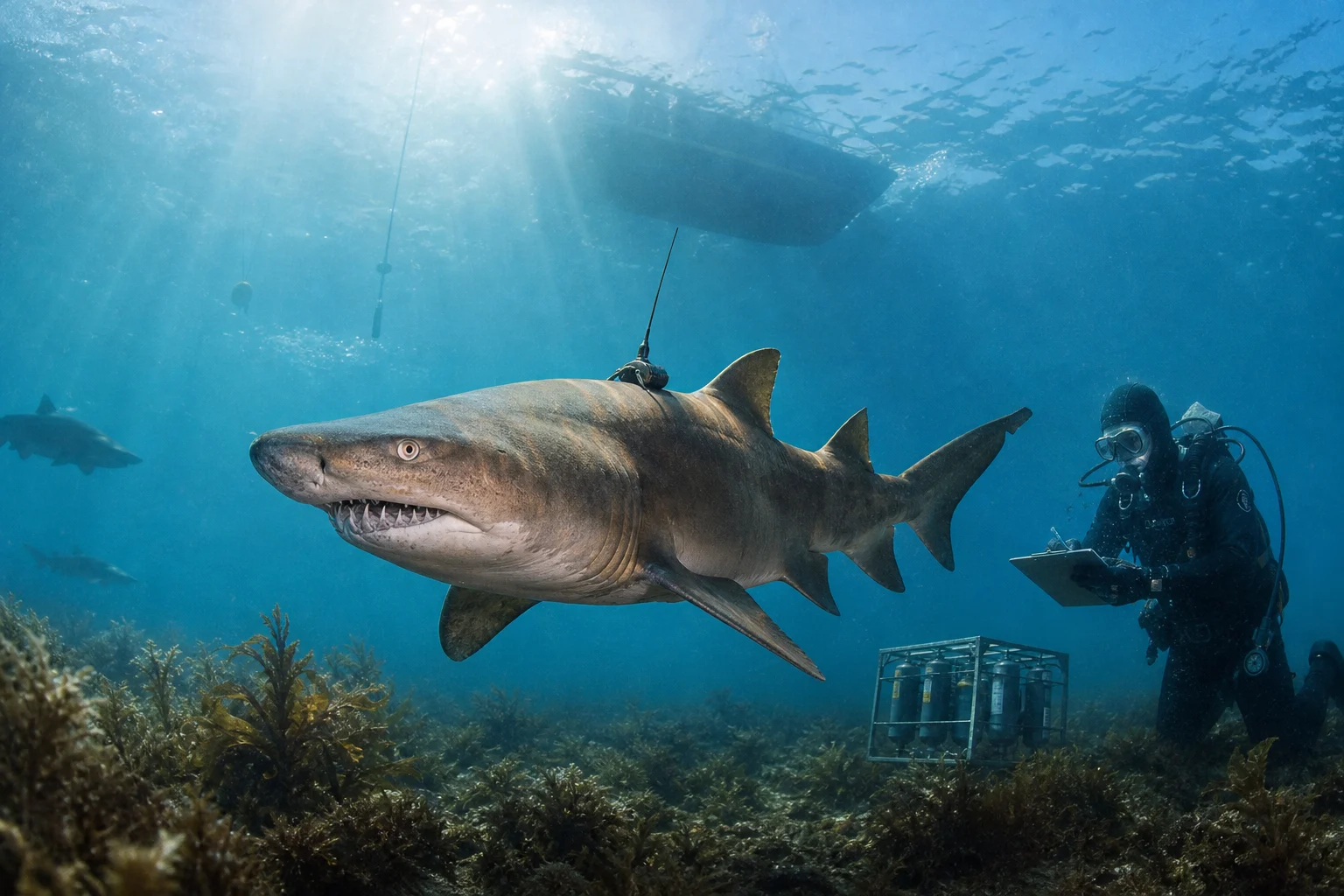
A new investigation has renewed scrutiny of the legally permitted collection of sand tiger sharks from Delaware Bay for public display in aquariums around the world.
A peer-reviewed analysis in Frontiers in Conservation Science reports that 80 sand tiger sharks were removed from Delaware state waters between 2018 and 2024. The authors calculated that this represented about 27 percent of the 301 sand tigers then reported in aquariums worldwide. Collection rose from two animals in 2018 to 40 in 2023 before declining in 2024.
The trade is legal. Sand tiger sharks are normally a prohibited species in U.S. Atlantic fisheries and must be released with minimal injury, but NOAA Fisheries can issue exempted fishing permits for research or public display. Collection in Delaware waters also requires a state scientific collecting permit. NOAA told The Guardian that it applies a scientifically based annual quota and reviews applications individually; Delaware regulators said federal approval provides the state with evidence that permitted removals are sustainable.
Researchers nevertheless identify significant information gaps. The Northwest Atlantic population has never undergone a formal stock assessment, and its current size and trend remain uncertain. Sand tigers reproduce exceptionally slowly, while many animals collected in Delaware were large juveniles or adults near reproductive age. The paper also notes that Delaware Bay is federally recognized as a Habitat Area of Particular Concern for all sand-tiger life stages.
Of 76 sharks collected between 2021 and 2024, about 90 percent were exported. China, the United Arab Emirates, South Korea and Thailand received the largest numbers. State regulations require continuing status reports on collected sharks, but the authors say historical reporting and enforcement were incomplete, limiting information about survival after transport.
This matters directly to divers because the Northwest Atlantic population supports valued wildlife encounters from the Mid-Atlantic to North Carolina’s wrecks. Sand tigers are also important subjects for underwater photography, identification training and citizen-science observations. The study does not establish that aquarium collection has caused a population decline, but it argues that managers cannot demonstrate sustainability without better population, mortality and post-export data.
The authors recommend a more transparent permit process, a formal population assessment, improved lifetime tracking of collected sharks and consideration of international trade controls. Any editorial treatment should distinguish global IUCN status from the less-certain regional status of the Northwest Atlantic population.
Connected reporting
Dive sites and aquatic life in this story
Reporting record