Shipwreck Preservation ·
SS Richard Montgomery Mast Removal Set for September
Specialist crews will remove three masts from the explosives-laden Liberty ship under continuous oversight, while the Thames Estuary wreck’s no-entry exclusion zone remains fully in force.
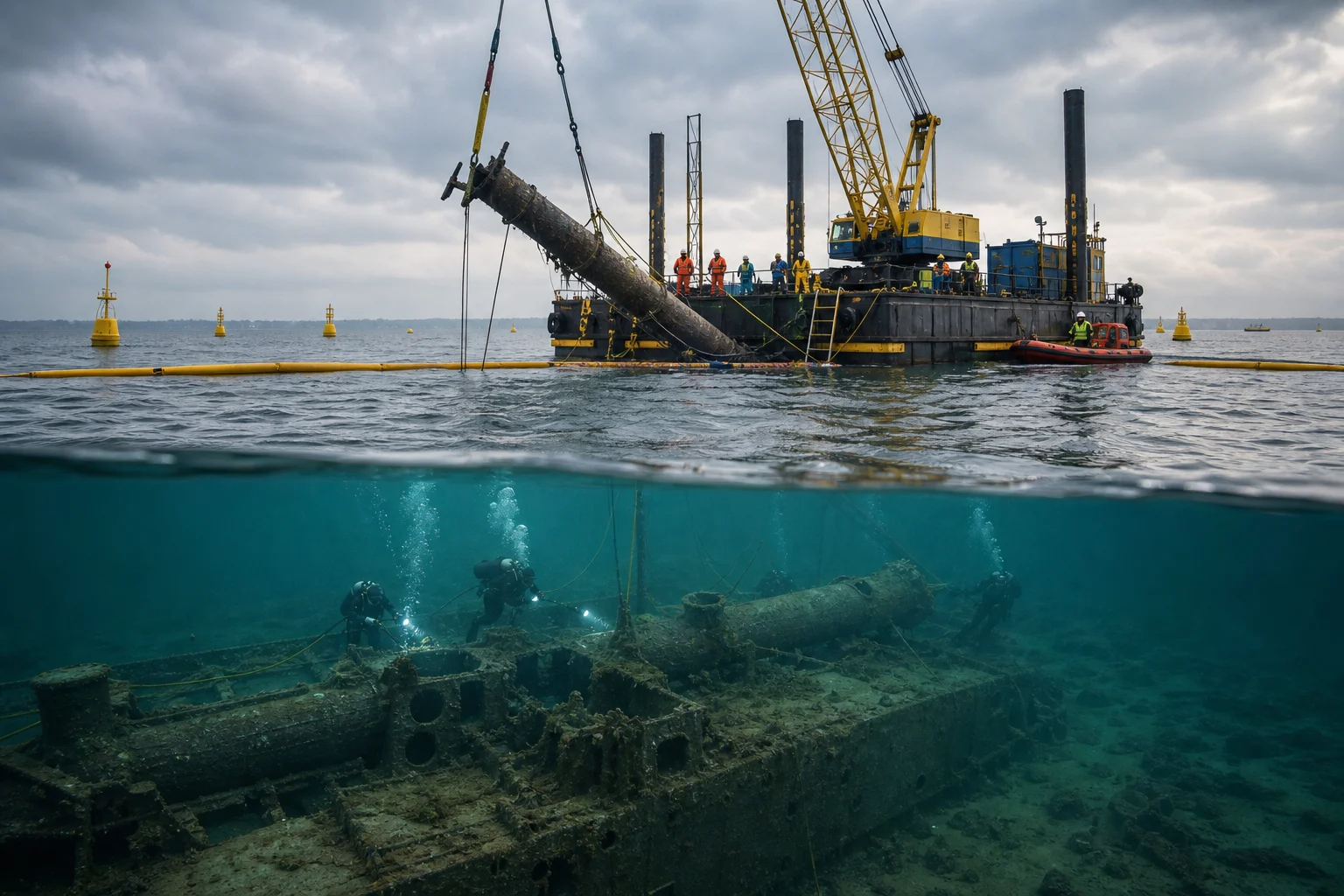
A major new phase in the long-term management of SS Richard Montgomery is scheduled to begin in early September 2026. The UK government says specialist maritime engineers will construct an underwater working platform and carefully cut and recover the American Liberty ship’s three remaining masts over several weeks.
Richard Montgomery grounded in the Thames Estuary in August 1944 while carrying munitions for the Allied war effort. Salvors removed part of the cargo before the vessel flooded and broke apart, but approximately 1,400 tonnes of explosives remain in its forward holds. The wreck has consequently been monitored for decades and is designated under the Protection of Wrecks Act 1973.
The mast project is intended to reduce the possibility that their weight or a future collapse could place additional strain on the wreck. Independent expert advice cited by the government concluded that the planned method can be carried out without increasing the risk presented by the remaining explosives. The operation will be overseen continuously and may extend beyond September if weather or site conditions delay the work.
For divers and boat operators, the practical rule is unchanged: this is not a dive site. The statutory no-entry exclusion zone remains in effect during the operation and will remain after the masts are removed. It is marked on Admiralty charts, surrounded by warning buoys and monitored around the clock.
After recovery, the masts are expected to undergo specialist conservation at The Historic Dockyard Chatham. Plans call for their eventual public display in Kent, preserving a visible part of the wreck’s Anglo-American wartime history while leaving the dangerous hull and cargo undisturbed on the seabed.
Connected reporting
Dive sites and aquatic life in this story
Reporting record