Training & Certification ·
SDI Lowers Open-Water Training Ratios and Requires Reductions in Challenging Conditions
Standards effective June 15, 2026 cap standard open-water classes at six students per instructor, tighten supervision for junior divers and require smaller groups when visibility, current, entries or temperature increase risk.
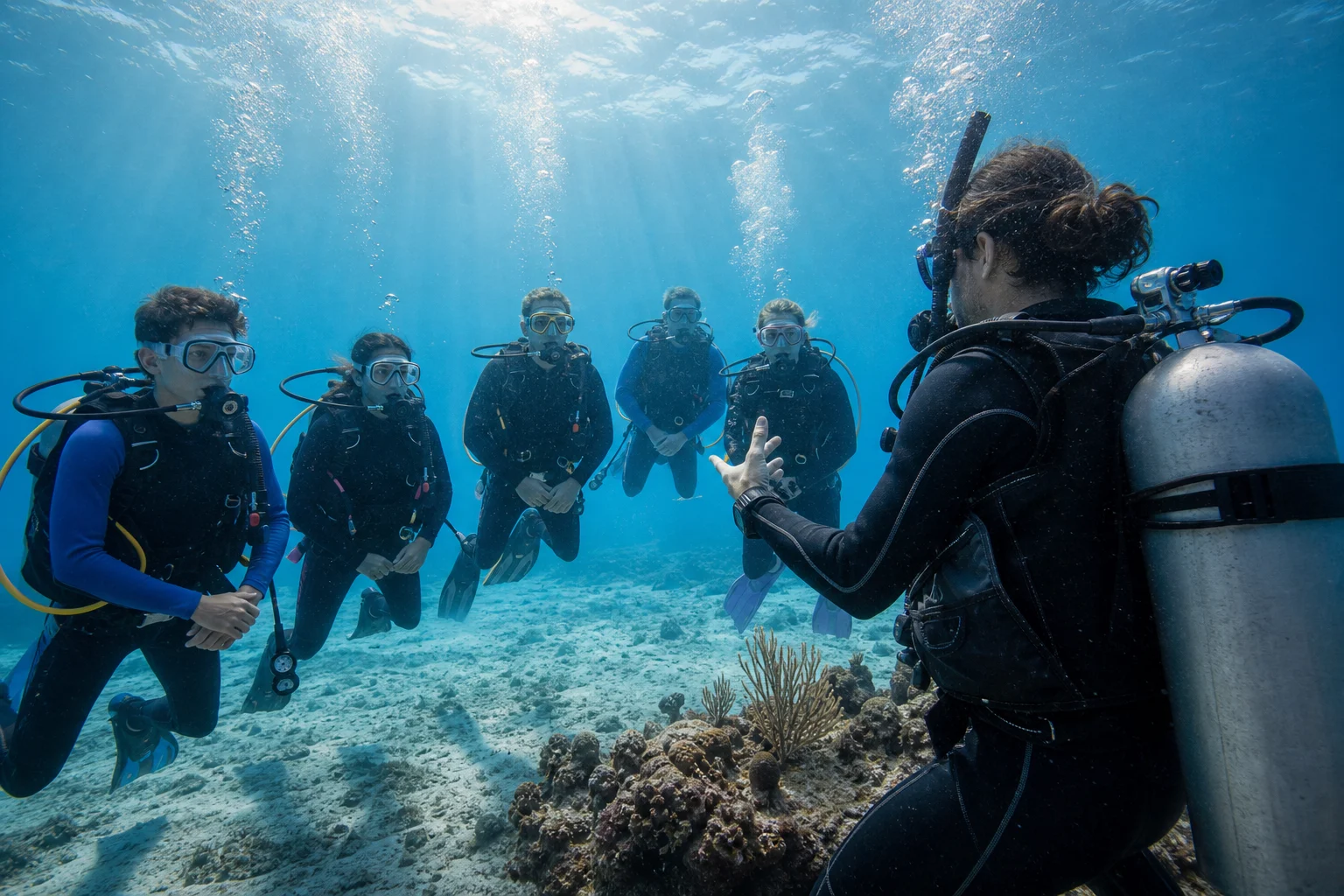
Scuba Diving International has tightened student-to-instructor ratios across several core diver courses and made environmental conditions an explicit reason to reduce class size.
The changes appear in version 0626 of the SDI Standards and Procedures Manual, Part 2: Diver Standards. The revision history dates the update to June 15, 2026. It covers the Supervised Diver, Open Water Scuba Diver, Inactive Diver/Refresher, Rescue Diver and Shallow Water Diver standards, with additional junior-diver buddy clarifications in several courses.
For the SDI Open Water Scuba Diver course, the maximum in-water ratio is now six students per instructor under suitable conditions. One active assistant instructor or divemaster may support two additional students, and two active assistants may bring the total to ten. If the instructor has to ascend with a diver, an assistant must make a safe, immediate ascent with everyone remaining below rather than continuing the training dive without the instructor.
The rules are tighter when anyone in an Open Water class is under 15. In that case, the maximum is four students per instructor, with no more than two under 15. SDI says reduced junior ratios apply across its courses, so instructors and dive centers should consult the individual course standards rather than assuming the adult maximum applies.
The revision also makes clear that the listed maximums are not default targets for every site. Full ratios assume the professional can see all divers, surge is minimal, there is no current or flow and the forecast is stable. Ratios must be reduced for visibility below roughly 5 metres/16 feet, obstructed sight lines, strong current or surge, boat diving, difficult entries or exits, long surface swims, unrelated traffic at the site, students needing more attention or extreme temperatures.
That distinction matters for students and parents comparing courses. A class can comply with the headline numerical cap yet still be too large for the actual environment. Prospective students should ask how many divers will be assigned to each instructor, whether assistants will be in the water, and how the operator reduces ratios when local conditions deteriorate.
For instructors and dive centers, the practical change is both operational and documentary: staffing plans, boat capacity, junior scheduling and site selection should be checked against the June 2026 manual before courses are sold or conducted. The agency’s public summary is useful, but the controlling details remain the current course standards and any applicable regional requirements.
Reporting record