Aquatic Life ·
Scientific Divers Map Kodiak’s Shift From Bull Kelp to Giant Kelp
A NOAA-led field mission used scuba video transects, drones and environmental DNA to investigate a kelp-community change stretching across hundreds of kilometres of Alaska coastline.
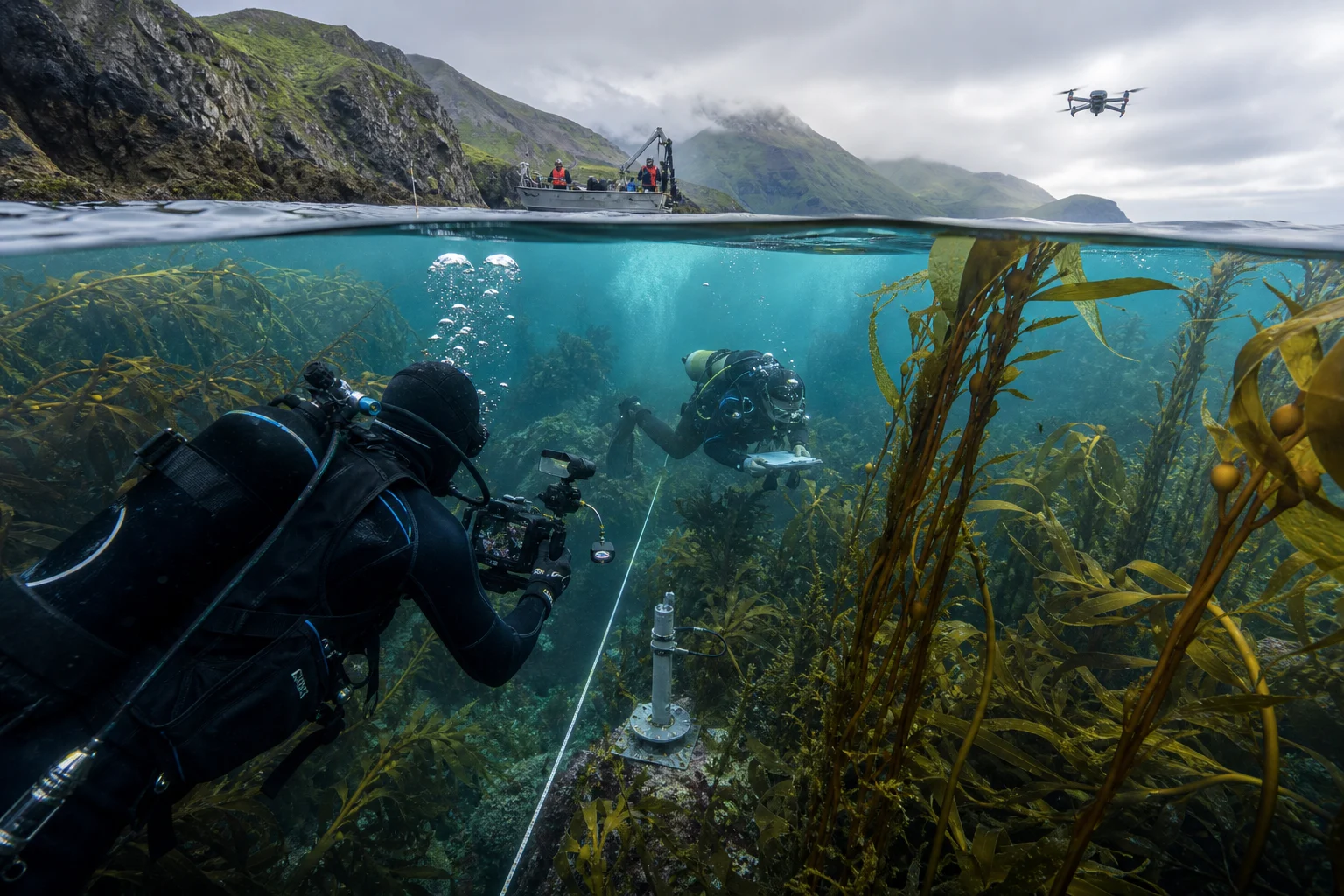
A scientific-diving mission around Kodiak Island is building a baseline for an ecological shift that is visible from the surface but poorly understood below it. NOAA’s National Centers for Coastal Ocean Science reports that giant kelp has increasingly replaced bull kelp as the region’s dominant canopy-forming species over the past two decades.
During a week-long mission, researchers from NOAA, the Cook Inlet Regional Citizens Advisory Council, the University of Alaska Fairbanks and other partners documented giant- and bull-kelp forests across hundreds of kilometres of coastline. The team combined aerial drone imagery with underwater scuba video transects, environmental-DNA samples and measurements of ecological and physical conditions.
Both kelps create food, shelter and nursery habitat, but a change in the dominant canopy can reshape light, water movement and the structure available to fish and invertebrates. The investigators are now working to determine which environmental factors are enabling giant kelp’s expansion and what ecological consequences follow when a bull-kelp system becomes giant-kelp dominated.
The fieldwork does not yet establish whether the change is beneficial or harmful, nor does it provide a finished map of every Kodiak kelp bed. NOAA describes this as an ongoing assessment whose imagery and ecological data will be used to characterize the forests, model future trends and connect the shift to wider nearshore-habitat mapping.
For divers, the survey offers both a practical lesson and a future reference point. Kelp sites that appear familiar may be changing in species composition and structure, so dated photographs, video with location and depth metadata, and consistent observations can become valuable records. Divers should avoid attaching equipment to kelp, cutting corridors or treating an expanding species as permission for unsanctioned removal; management conclusions must wait for the ecological analysis.
Connected reporting
Dive sites and aquatic life in this story
Reporting record