Artificial Reef Environmental Controversy ·
Recife Shipwreck Park Faces Turbidity and Debris Concerns During Port Dredging
Divers report severely reduced visibility and waste around purpose-sunk tugboats, while port officials say no technical evidence has linked the conditions to dredging.
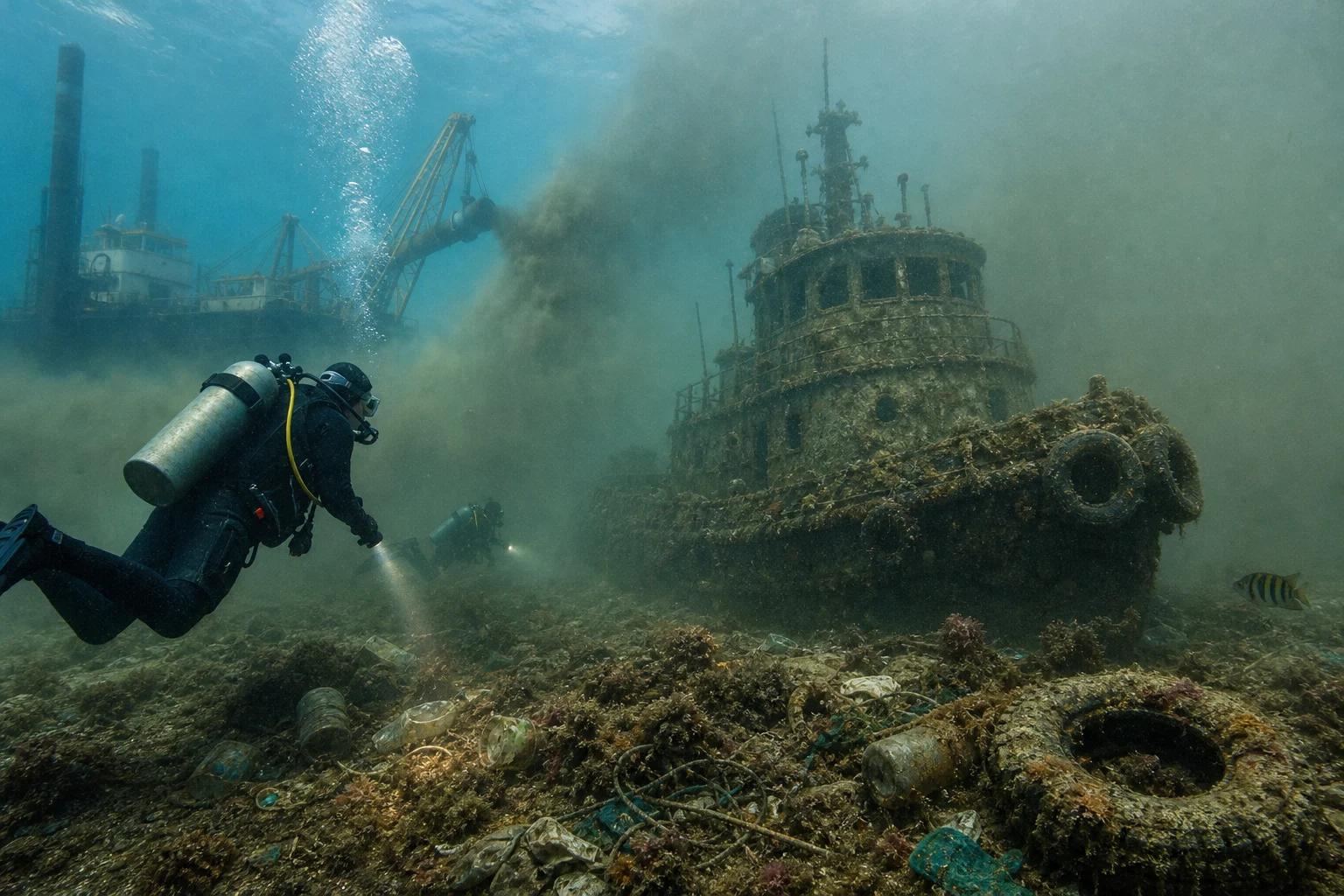
Divers and operators in Pernambuco are reporting unusually turbid water and marine debris around Recife’s artificial shipwreck park, prompting calls for closer investigation of a nearby port-dredging project.
The Parque dos Naufrágios Artificiais de Pernambuco includes the purpose-sunk tugboats Mercurius, Saveiros and Taurus. Local reporting says the southern edge of the approved offshore sediment-disposal area lies approximately 1.5 kilometres from the park. A submission to Brazil’s Federal Public Ministry asks investigators to examine dredge tracking records, disposal reports, sediment-dispersion studies and environmental monitoring, and to conduct a scientific-diving or remotely operated vehicle inspection of the wreck area.
Operators told Diario de Pernambuco that poor visibility and debris had made diving impractical on many of the wrecks. The reports are observations from water users, however, and do not by themselves demonstrate that dredging caused the conditions.
Porto do Recife says the work is authorized by the state environmental agency and includes monitoring of water, sediment and aquatic life. It states that there is no confirmed technical evidence connecting the dredging to pollution or waste on the wrecks, but has promised expanded monitoring of debris, turbidity and water transparency around the principal dive sites. Earlier reporting also documented the port’s removal of more than ten tonnes of solid waste from the estuary; port officials characterize that material as long-accumulated debris disturbed and collected during dredging rather than waste created by the operation.
The dispute matters beyond day-to-day visibility. The wreck park functions as marine habitat, a research area and a tourism asset, and surrounding rhodolith beds add ecological sensitivity. Until sampling and hydrodynamic evidence establish what is happening, divers should treat reports of deteriorated conditions as an operational warning rather than a proven finding of environmental damage or wrongdoing.
Reporting record