Scientific Findings ·
Patagonian Shipwreck Reefs Alter More Than Fish Habitat, Study Finds
Water surrounding four purpose-sunk wrecks at Argentina's Las Grutas Underwater Park showed higher chlorophyll-a, higher pH and sustained nutrient depletion compared with nearby soft-bottom controls.
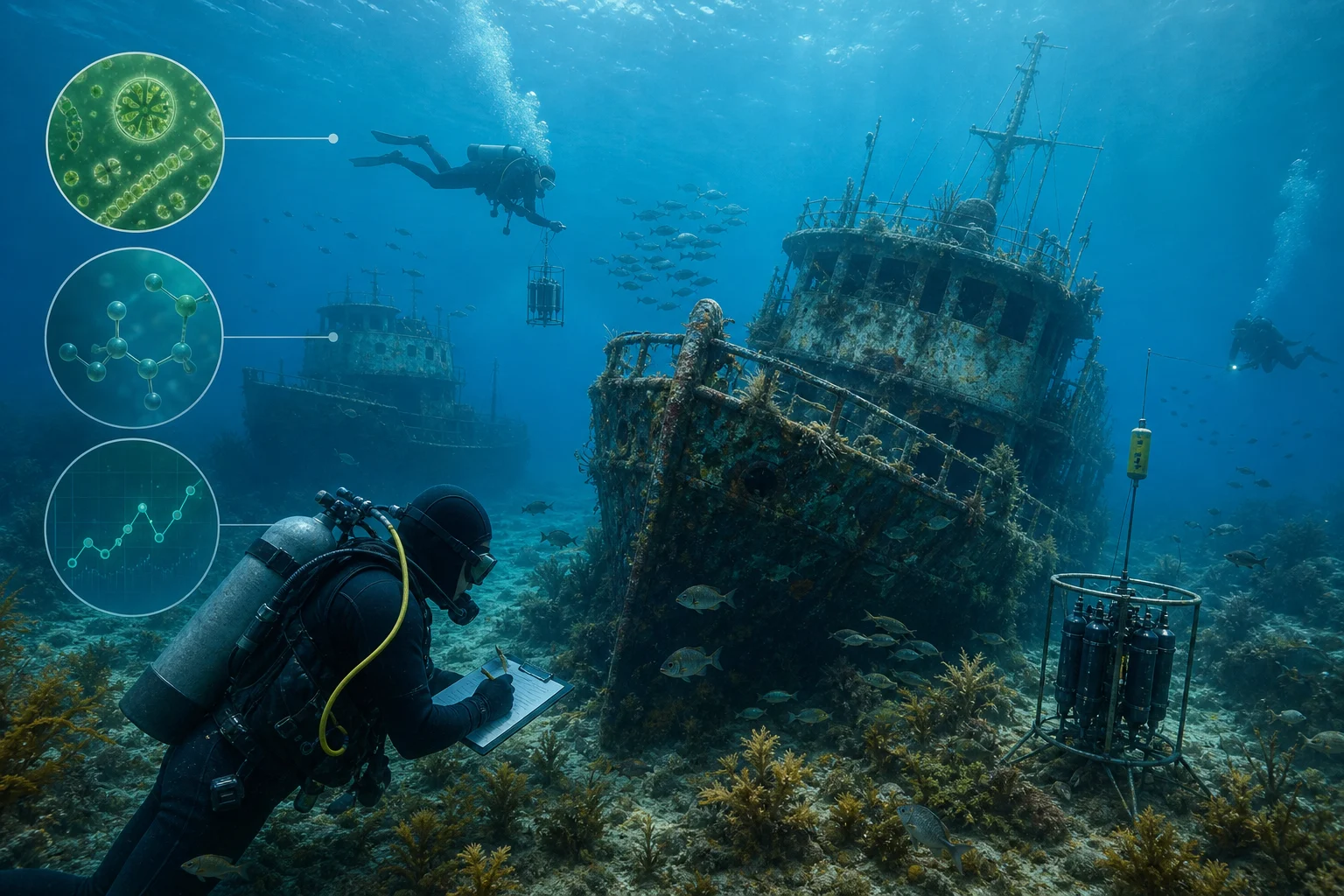
A peer-reviewed study of four shipwreck artificial reefs in Argentine Patagonia has found that their ecological influence extends beyond the organisms attached to or sheltering around the wrecks. Researchers detected consistent differences in the surrounding water column when they compared the wreck sites with non-reef soft-bottom areas in Las Grutas Underwater Park.
The team measured biological and physicochemical conditions while accounting for season, distance from shore and differences among the vessels, including size, age, orientation to currents and associated biomass. Seasonality and coastal position remained the strongest large-scale drivers, but the reef and control sites still showed distinct patterns.
Relative to the soft-bottom controls, water around the artificial reefs had as much as a four-fold depletion of dissolved inorganic nutrients. Chlorophyll-a, an indicator associated with phytoplankton biomass and primary production, was up to 2.5 times higher, and pH was also elevated. The researchers additionally found patterns consistent with enhanced recycling of colored dissolved organic matter.
Taken together, the results suggest that the wrecks are participating in benthic-pelagic coupling: processes on and around the seafloor structures appear linked to production and nutrient use in the water above them. That is a broader ecological role than simply aggregating fish around hard structure, although the observational study does not establish that every purpose-sunk wreck will produce the same outcome.
Las Grutas is an established recreational diving destination built around former fishing vessels deployed as artificial reefs. The wrecks selected for the study rest within a larger underwater park offering sites for different experience levels. Their value as accessible dive attractions makes the park a useful real-world setting for linking reef ecology, management and tourism.
For divers and reef managers, the practical lesson is that monitoring should include water chemistry and plankton-related indicators as well as fish counts, benthic coverage and structural condition. The findings support a more complete assessment of artificial-reef performance, while also cautioning that wreck age, orientation, biomass, season and coastal setting can influence results.
Connected reporting
Dive sites and aquatic life in this story
Reporting record