Proposed Artificial Reefs ·
North Carolina Proposes 125-Acre Albemarle Sound Reef Using Alligator River Bridge Material
State fisheries officials will present plans for a new estuarine reef northeast of the Alligator River mouth, potentially giving concrete from a 1960 bridge a new habitat role after its replacement.
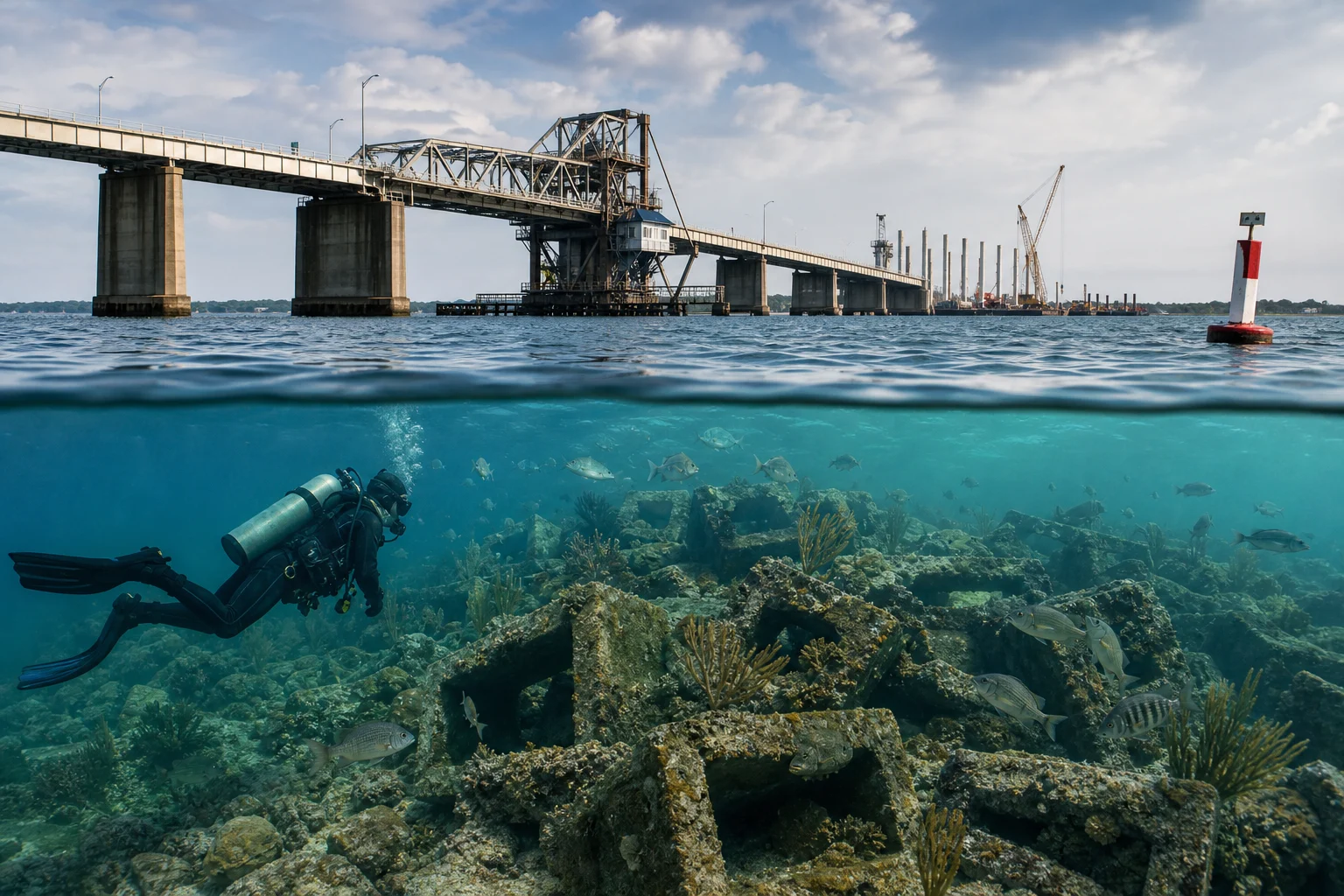
North Carolina is seeking public input on a proposed 125-acre artificial reef in Albemarle Sound. The Division of Marine Fisheries will hold an informational meeting on December 3 in Manteo to explain the project and answer questions before the site advances further through planning and review.
The proposed reef area lies approximately 3.5 miles northeast of the mouth of the Alligator River. State officials identify demolished material from the existing Lindsay C. Warren Bridge, commonly called the Alligator River Bridge, as the planned reef material. The announcement does not yet specify the quantity, configuration, placement depths or deployment schedule.
The bridge opened in 1960 and is being replaced with a modern fixed-span crossing on a new alignment. Construction of the replacement began in February 2025, with the new bridge expected to open in fall 2029. Demolition of the existing swing-span bridge is scheduled to begin after the new crossing opens, so reef construction would be a future project rather than an imminent deployment.
North Carolina has extensive experience reusing bridge concrete in permitted reef areas. The earlier Bonner Bridge project placed approximately 80,000 tons of material during 68 barge trips to eight ocean reef sites. The Albemarle proposal differs because it would establish a new estuarine site rather than add material to existing offshore reefs.
State fisheries officials say artificial reefs create spawning and foraging habitat over otherwise flat sand or mud. North Carolina currently maintains 72 artificial reefs: 43 in the ocean and 29 in estuarine waters. Some estuarine sites function as oyster sanctuaries, while others support recreational fishing and broader habitat goals.
For divers, the proposal is noteworthy but should not yet be treated as a future public dive site. Albemarle Sound is shallow, turbid and exposed to boating traffic, and the state has not published clearance, navigational marking, access or diver-use plans. Its most immediate relevance is as an example of bridge-reuse planning and estuarine habitat creation.
Public review provides an opportunity to examine sediment conditions, navigation, material preparation, fishery effects, cultural resources and long-term monitoring before placement. A future update should follow any site approval, permit issuance, bridge-demolition schedule and final deployment design.
Connected reporting
Dive sites and aquatic life in this story
Reporting record