Wreck Archaeology ·
Night Patrol at Catalina A24-25 Reinforces a No-Stopping War-Grave Buffer
Three fishers face alleged violations after an August 10 interception at the protected flying-boat wreck near Cairns, where vessels may transit but cannot stop, anchor, fish or conduct a wreck dive.
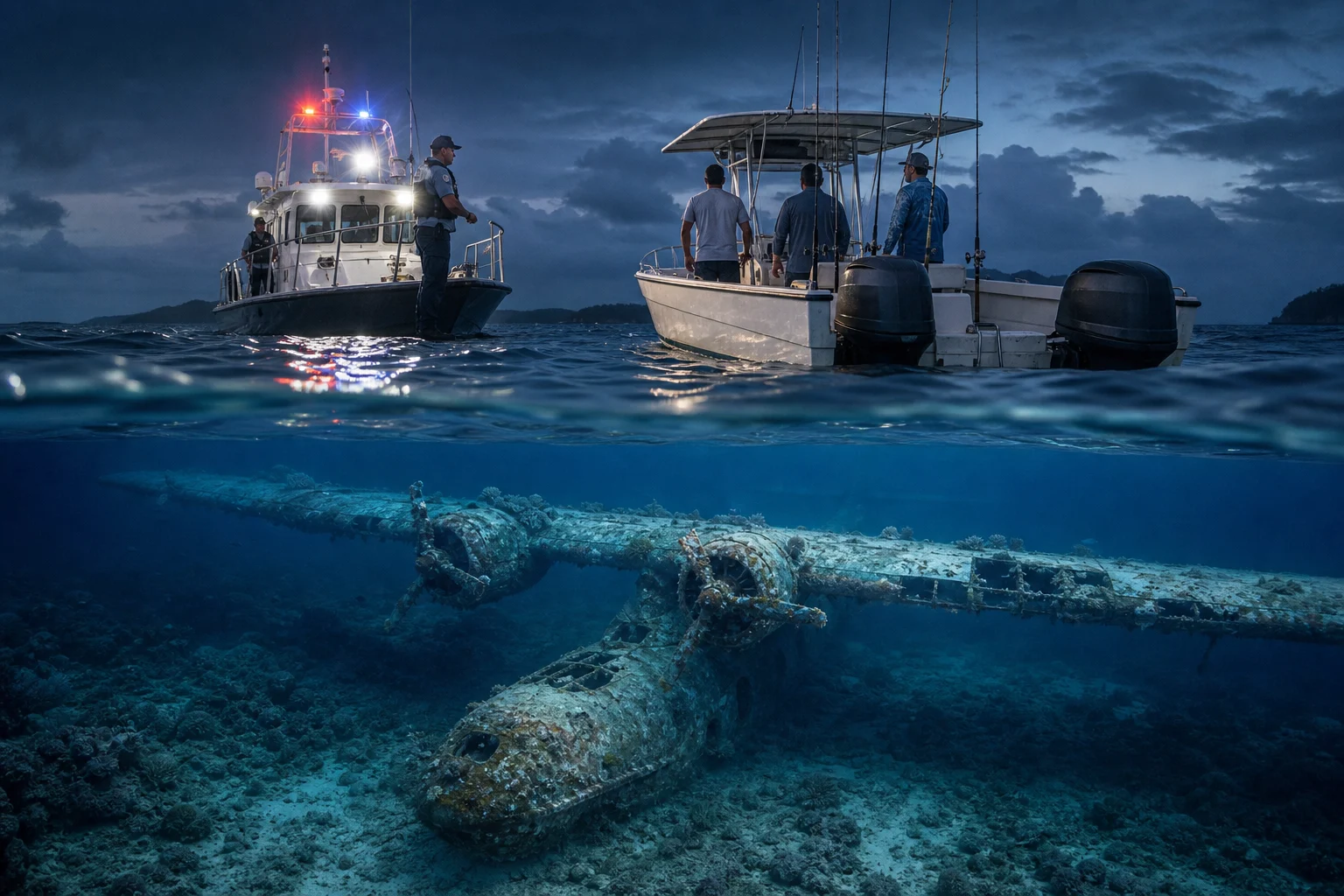
An enforcement action at the wreck of Royal Australian Air Force Catalina A24-25 has put renewed attention on one of the Great Barrier Reef Marine Park’s most tightly protected maritime heritage sites.
The Great Barrier Reef Marine Park Authority says compliance officers intercepted a recreational vessel at night on August 10, 2026, inside the Maritime Cultural Heritage Special Management Area surrounding the aircraft wreck near the Frankland Islands, south of Cairns. Three fishers allegedly had freshly caught fish aboard and could face fines of up to A$3,600 each. The allegations have not been adjudicated, and the individuals should not be described as guilty unless an official outcome is confirmed.
The case matters beyond fishing enforcement because the site’s rules also determine whether divers and dive boats can visit it. The one-kilometre-square special management area is not an ordinary no-take zone. Vessels may pass through, but they cannot stop except in an emergency, anchor, fish or collect. Those restrictions effectively rule out recreational diving on the wreck because a dive vessel cannot stop inside the buffer.
Catalina A24-25 disappeared on February 28, 1943, while returning from an anti-submarine patrol escorting an Allied convoy toward Milne Bay. All 11 airmen aboard were lost. A local scuba diver located the aircraft wreckage in 2013, and the Royal Australian Air Force formally identified it in 2015 after an investigation that included Navy clearance divers.
At the request of the airmen’s families, the heritage buffer was legislated in 2015. The wreck may contain human remains and is treated as an underwater military gravesite. It is one of two nationally significant RAAF Catalina sites protected by special management areas in the marine park.
The 2026 incident did not create a new closure or expand the boundary. It demonstrates that the established rules are actively monitored and enforced, including at night. The Reef Authority says the intercepted boat’s chart plotter allegedly showed a direct course to the wreck.
For divers, the practical lesson is straightforward: a wreck’s location on a chart or its prior discovery by scuba divers does not make it an available dive site. Maritime heritage protections can prohibit stopping even when navigation through the surrounding water remains legal. Dive operators and independent boaters should check both marine-park zoning and site-specific management rules before planning any historic-aircraft or shipwreck dive.
Responsible documentation also means respecting the distinction between public history and access. The story of Catalina A24-25 can be preserved through official records, memorial material and authorized research without promoting coordinates or encouraging unauthorized visits to the final resting place of its crew.
Connected reporting
Dive sites and aquatic life in this story
Reporting record