Diver Safety/Medicine ·
Month-Long CCR Expedition Found No Group-Level Lung or Vision Decline Within Oxygen Limits
Twelve divers completed 173 long rebreather dives over 31 days without statistically significant group changes in spirometry or visual acuity, supporting disciplined oxygen-exposure management while leaving important individual and sample-size limits.
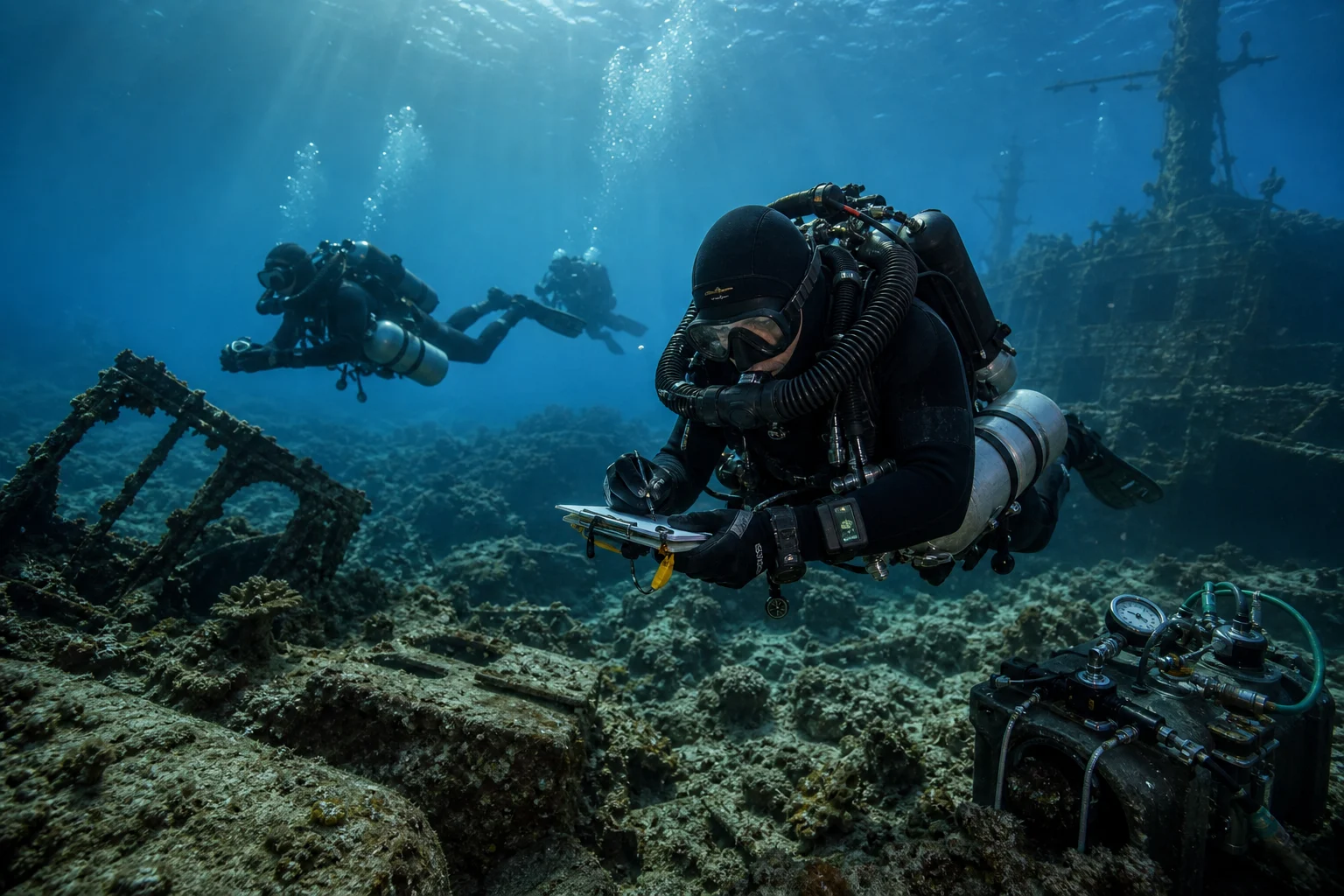
A month-long closed-circuit rebreather expedition produced reassuring—but deliberately narrow—evidence about repeated oxygen exposure. Twelve divers completed 173 dives in Chuuk Lagoon over 31 days while researchers tracked lung function, visual acuity and modeled oxygen exposure.
The dives averaged 101 minutes and reached a mean maximum depth of 38 metres. The team reported that daily unit pulmonary toxic dose and central-nervous-system oxygen-toxicity limits were respected. Across the group, researchers found no statistically significant change in spirometry and no overall trend in visual acuity.
Individual findings still matter. One diver showed decreases in several lung-function measures, and another developed spirometric evidence of mild obstruction by the end of the expedition. Visual acuity also fluctuated during the project. The study does not establish that prolonged CCR exposure is risk-free or that every diver responds identically.
The practical lesson is procedural: expedition teams should calculate and track cumulative oxygen exposure, preserve recovery time, record symptoms and avoid treating a computer’s CNS percentage as the only relevant signal. New cough, chest tightness, reduced exercise tolerance, visual change, unusual fatigue or neurological symptoms warrant stopping the dive program and obtaining appropriate medical advice.
These results apply to the exposure range and disciplined profiles studied. They should not be used to justify exceeding agency, manufacturer or established oxygen-exposure limits, nor to assume that deeper, longer or more aggressive schedules will produce the same outcome. For technical teams, the study supports conservative oxygen-budgeting and individualized monitoring rather than complacency.
Connected reporting
Dive sites and aquatic life in this story
Reporting record