Marine Conservation ·
Kauaʻi Divers Begin Emergency Rescue of Storm-Damaged Corals
A permitted ten-day operation at Kōloa Landing is locating, documenting and reattaching viable colonies displaced by Hurricane Lowell, with more than 2,000 damaged corals targeted for intervention.
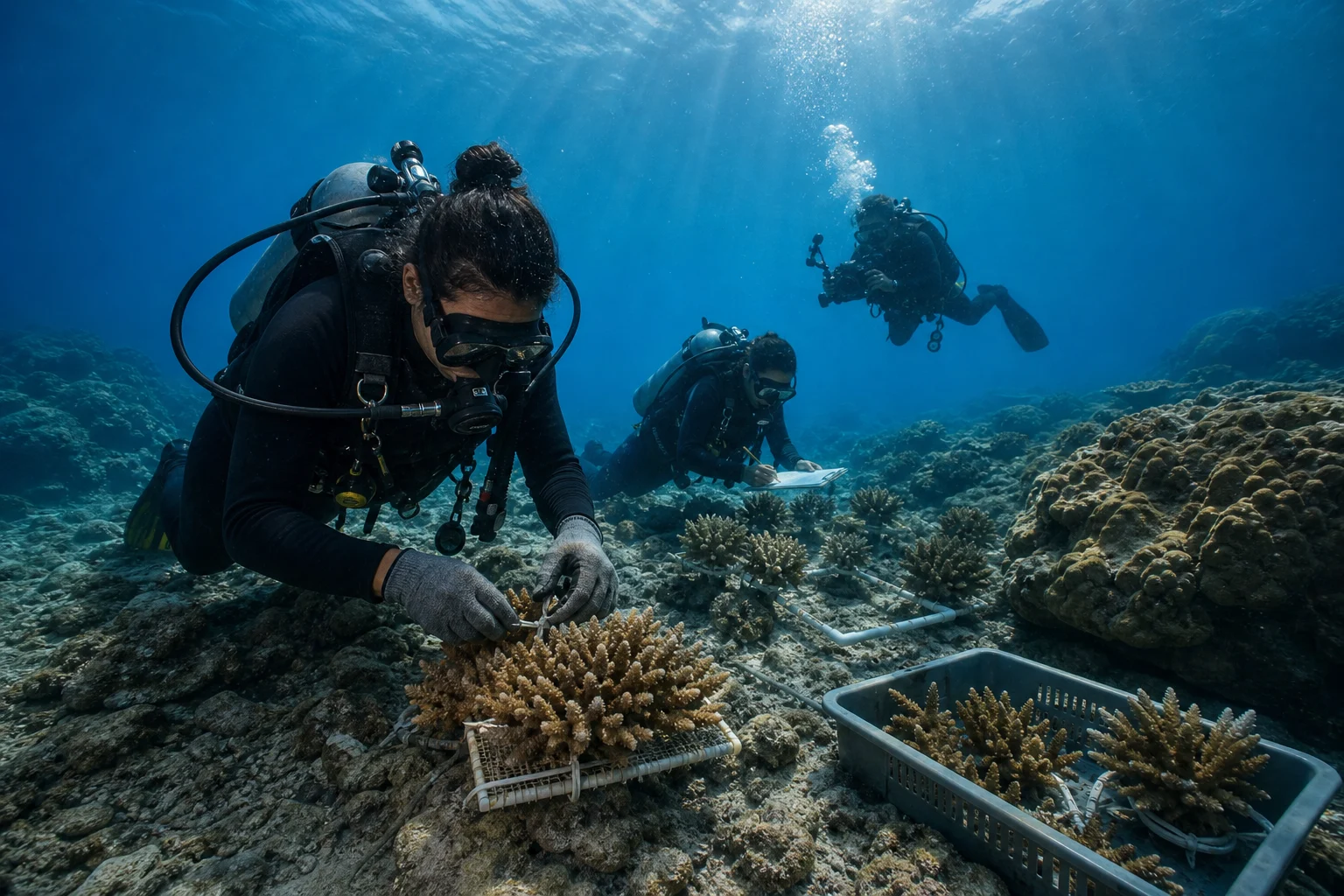
Trained divers and coral-restoration specialists have begun an emergency operation at Kōloa Landing on Kauaʻi to rescue living corals displaced by Hurricane Lowell.
The storm struck in early September with destructive surf along the island’s south- and west-facing coasts. At Hanakā‘ape Bay, surveys found coral colonies broken, overturned or detached from the reef. Many remained alive, creating a limited opportunity to stabilize them before sediment, abrasion and continued movement cause further damage.
Hoʻomalu Ke Kai and the Kauaʻi Coral Restoration Nursery are coordinating the October 3–13 response with conservation partners. Divers are locating and documenting viable colonies, evaluating their condition and reattaching suitable corals to stable reef habitat. The organizers and diving media report that more than 2,000 damaged corals are targeted for intervention.
The work is taking place through the Hawaiʻi Emergency Reef Response Network under NOAA Restoration Center Special Activity Permit 2027-18 and applicable state authorizations. Those controls matter because coral handling, relocation and attachment require both ecological expertise and legal permission; well-intentioned recreational divers should not move damaged coral independently.
The emergency response is linked to a wider financing mechanism. Hurricane Lowell triggered a $300,000 payout from a parametric reef-insurance policy held by The Nature Conservancy with the response network. The money is intended to support damage assessment, coral rescue and reef repair after qualifying storms.
Reattachment is the start of recovery rather than proof of success. Teams will need to monitor whether colonies remain secure, survive handling and resume growth. Some damaged colonies will not be viable, and even a large rescue operation can address only a fraction of reef-wide storm impacts.
For divers, the project shows the importance of trained underwater responders after severe weather. Scientific observation, controlled buoyancy, careful handling and reliable documentation can determine whether a living colony receives a second chance or is damaged further. It also reinforces the need to check local closures and restoration activity before returning to a storm-affected dive site.
Connected reporting
Dive sites and aquatic life in this story
Reporting record