Underwater Archaeology ·
Hybrid AUV Reveals Senator’s Buried Stern and Nash Automobile Cargo
A two-year NOAA-supported survey used acoustic imaging, still photography and laser scanning to document the Lake Michigan steamer at depths reaching 420 feet.
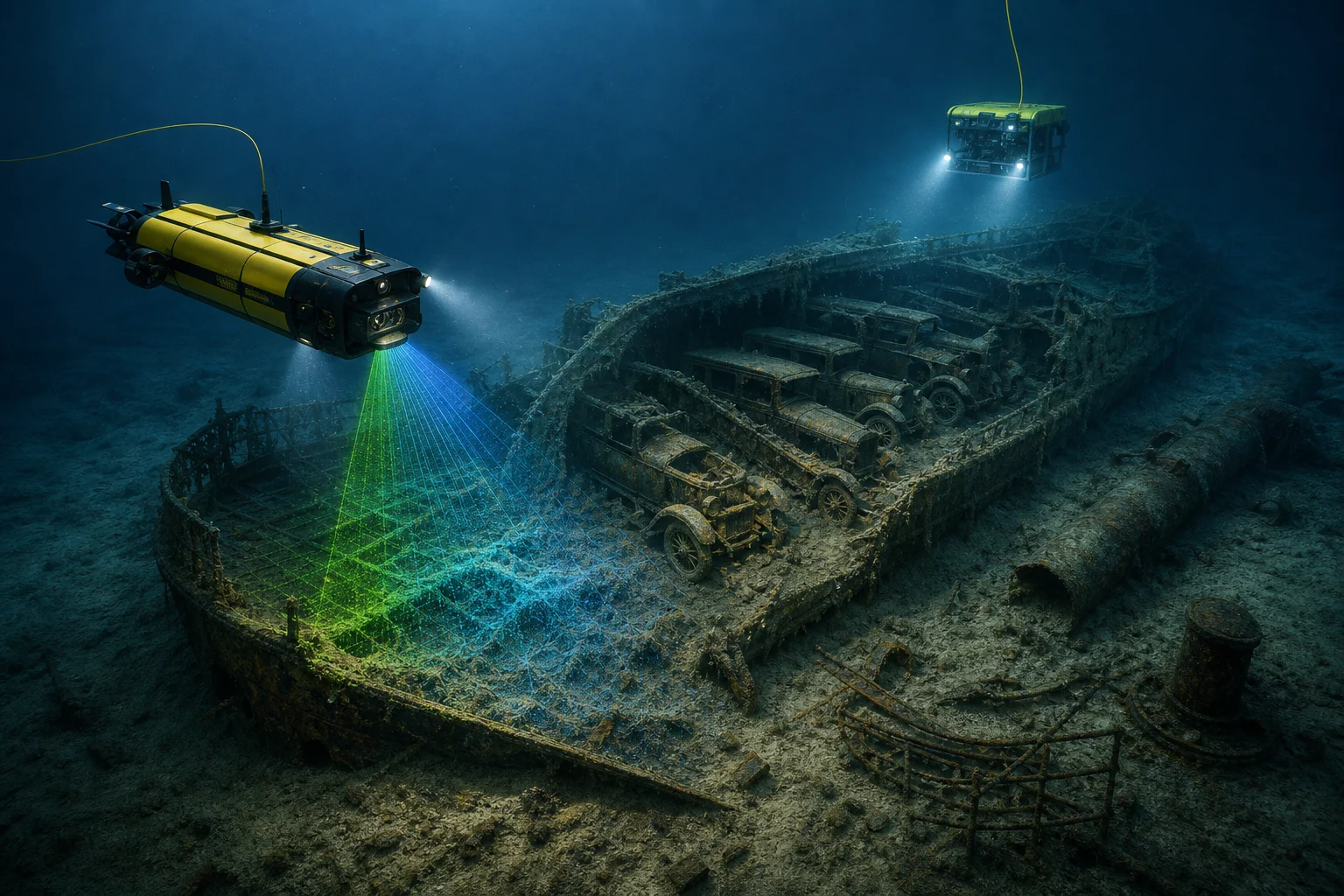
A two-year technology demonstration in Wisconsin Shipwreck Coast National Marine Sanctuary has produced new archaeological detail from the wreck of the steamer Senator, including improved imagery of automobiles still inside the hull and evidence that the ship’s stern is buried in the lakebed.
Maritime archaeologists and engineers returned to Lake Michigan from July 13–28, 2026, following an initial 2025 field season. They used a Saab Sabertooth hybrid autonomous underwater vehicle/remotely operated vehicle equipped with acoustic, imaging and laser-scanning sensors. The platform can operate autonomously or through a tether, allowing researchers to cover deep wreck sites efficiently without exposing divers to long decompression obligations.
The 2026 team completed seven vehicle dives on Senator, in addition to a dock test. Survey depths ranged from approximately 300 to 420 feet. Investigators confirmed that the entire stern section is embedded in clay and identified the surrounding impact crater, helping refine their understanding of how the ship struck the bottom. The debris field included the smokestack, rail sections and vents.
Senator was built in 1896 and sank in 1929 after a collision. Its unusual cargo—268 Wisconsin-built Nash automobiles—remains a defining feature of the site. New imagery shows vehicles still contained within the wreck. During the broader project, the team also demonstrated rapid photogrammetry and laser-mapping methods on the schooner Northerner and Senator, using a camera-and-laser system related to technology used for detailed Titanic mapping.
For Great Lakes divers, the work shows how autonomous systems can complement archival research, technical diving and conventional ROV surveys. Senator lies well beyond ordinary recreational limits, and the sanctuary’s archaeological protections remain in force. The published results provide a safer way for the wider diving community to examine a culturally important wreck without disturbing it.
Connected reporting
Dive sites and aquatic life in this story
Reporting record