New Ship Reef ·
From Oil Fields to Menhaden Fleet to Dive Reef: Calcasieu Pass Begins a Third Life
Delaware has placed the 180-foot Calcasieu Pass on the Del-Jersey-Land Reef, adding a new deep-water wreck with an unusually varied working history.
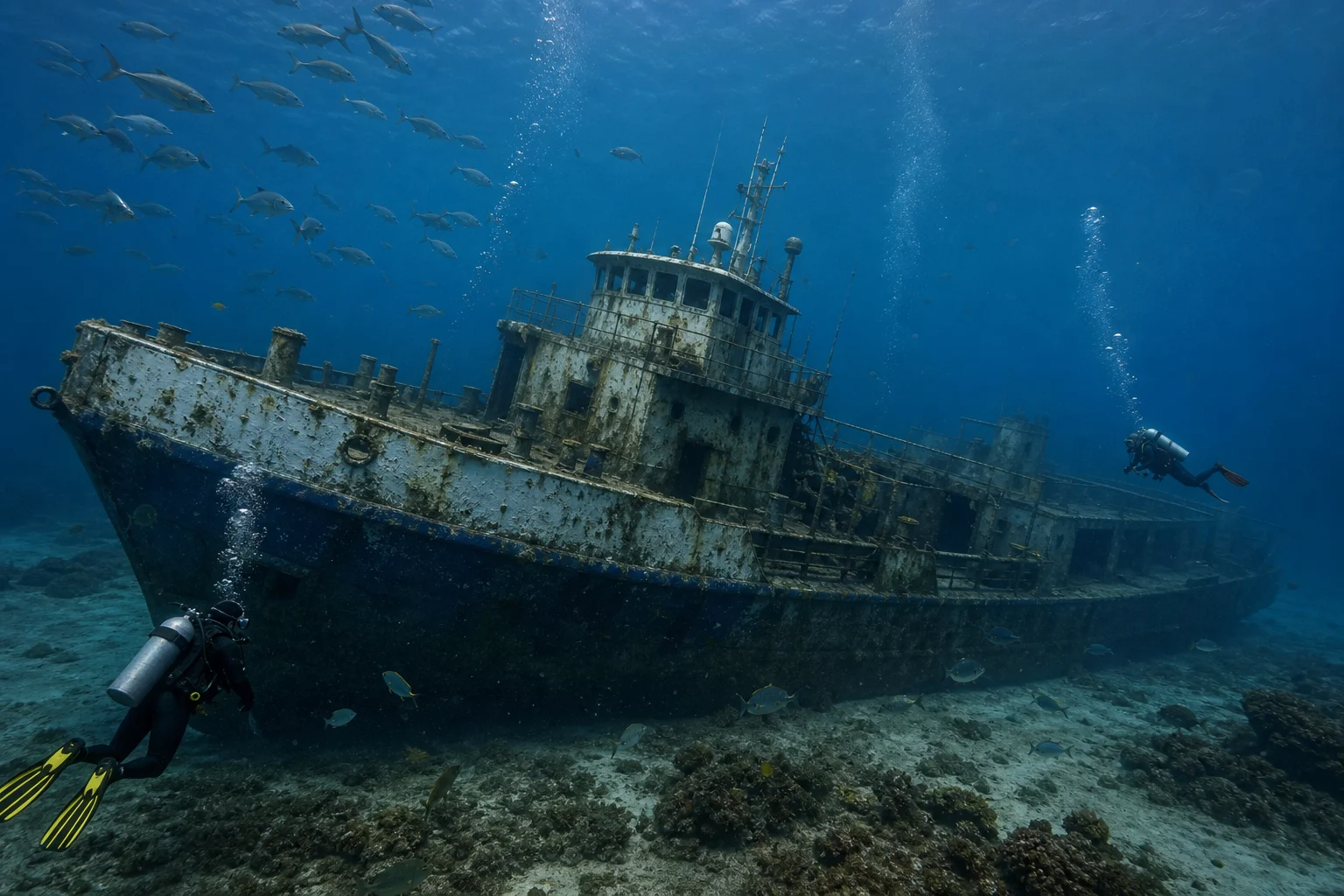
A vessel that spent decades serving two very different maritime industries has begun a third life beneath the Atlantic.
The Delaware Department of Natural Resources and Environmental Control announced August 18 that the 180-foot Calcasieu Pass was sunk on Artificial Reef Site 13, better known as the Del-Jersey-Land Reef. The permitted offshore site is positioned to serve ports in Delaware, New Jersey and Maryland and already anchors Delaware’s artificial-reef network.
Built in 1982, Calcasieu Pass first operated as an offshore oilfield supply vessel. In 1989 it was converted for the Atlantic menhaden fleet and spent more than 30 years sailing from Reedville, Virginia, as a processing ship. Menhaden are reduced into fish oil and ingredients used in products ranging from animal feed to cosmetics.
Before deployment, the vessel underwent environmental preparation and received approvals related to cleanliness and safety from federal authorities, according to DNREC. Norfolk-based Coleen Marine handled the sinking. Delaware used $285,000 in federal Sport Fish Restoration funding to purchase and reef the ship.
Its steel hull and superstructure now provide complex relief on a seafloor where hard substrate can be limited. Mussels, barnacles, corals and other organisms are expected to colonize the vessel, with fish and mobile invertebrates using the new structure for shelter and feeding.
For divers, Calcasieu Pass is more than additional habitat. Its 180-foot length and 40-foot beam create the potential for a substantial wreck dive, while its two-part working history gives the site a story worth preserving. DNREC describes it as a deep-water diving opportunity, which means practical planning information—coordinates, bottom depth, highest point, orientation, current, visibility and charter access—will be essential before NBM treats it as a complete Dive Site record.
The deployment should move Calcasieu Pass out of the Future Artificial Reefs tracker and into both the deployed Artificial Reefs collection and Historical Shipwrecks. It should also receive a Dive Site page once post-deployment surveys and verified diving details are available.
Connected reporting
Dive sites and aquatic life in this story
Reporting record