Historical Shipwrecks ·
Federal Court Keeps Titanic Artifact Auction on Hold
An August 24 order says a proposed sale of about 100 lots from the 1987 French Collection remains subject to court approval while preservation, inventory and oversight questions are examined.
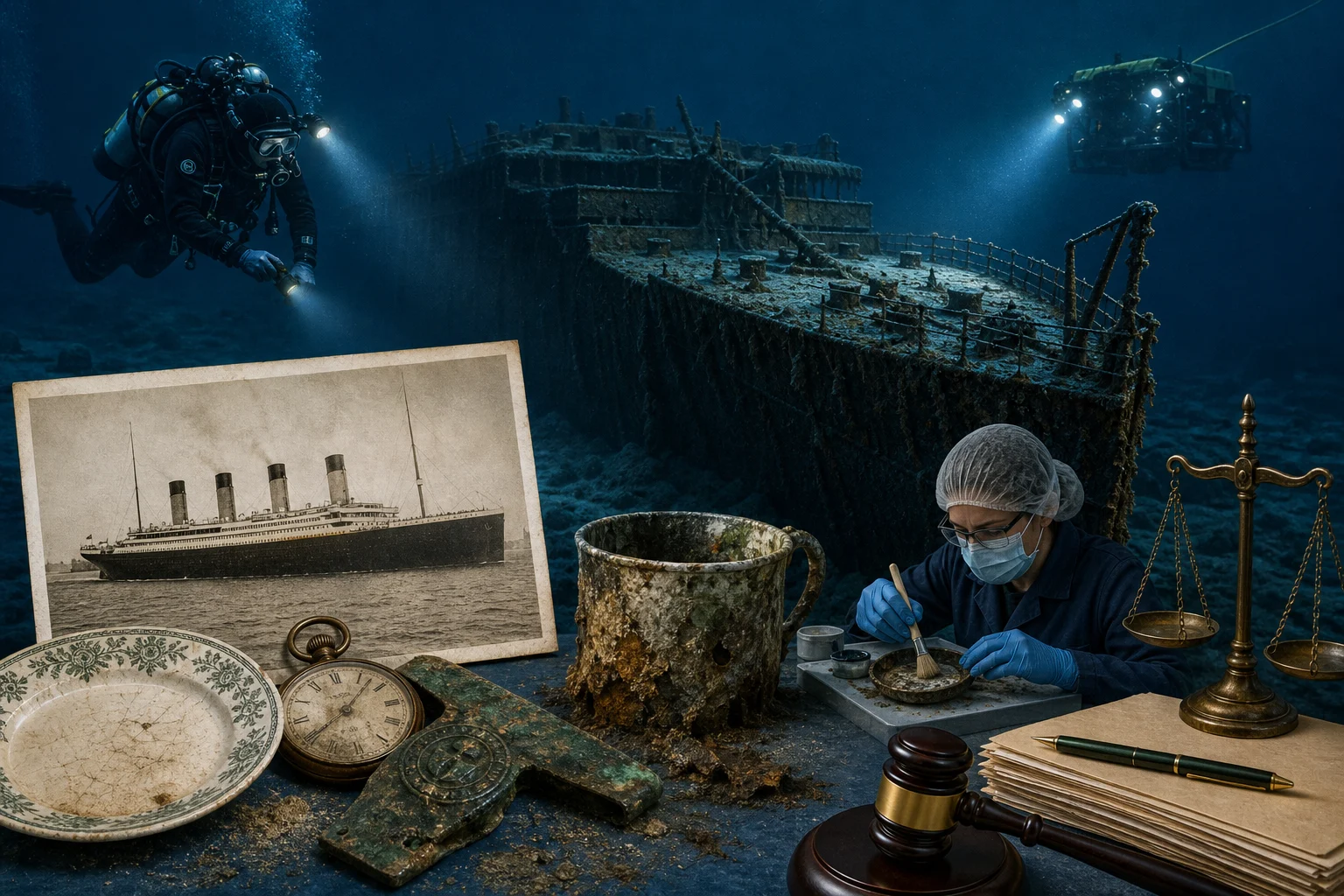
A federal court has kept a proposed auction of artifacts recovered from RMS Titanic on hold, ruling that the planned sale remains subject to the court’s jurisdiction and approval under the covenants governing the collection.
RMS Titanic Inc. proposed auctioning approximately 100 lots from the group commonly called the French Collection. Court filings clarify that those lots encompass 361 individual objects recovered during the 1987 expedition. The company argued that the U.S. court did not control those French-recovered artifacts and said a sale could help address financial pressures and support continued care of the wider collection.
In an opinion and order filed August 24, 2026, Senior U.S. District Judge Rebecca Beach Smith concluded that the existing covenants and conditions impose enforceable restrictions on the proposed sale. The auction therefore remains enjoined while the court considers further proceedings. This is not a final transfer of ownership to the government, nor a permanent ruling that no artifact could ever be sold.
The order directs RMS Titanic Inc. to propose a schedule, in consultation with the United States, for additional reporting and review. That process is expected to address a complete inventory, artifact condition, conservation status, financial information and potential inspections or expert input. NOAA, acting through the United States in the case, will have an opportunity to submit recommendations to the court.
The dispute reaches beyond the price of famous objects. Archaeological collections gain much of their meaning from shared context, documentation and long-term access. Dispersing related artifacts among private buyers can separate objects from the records and relationships that allow researchers and the public to interpret them together.
For divers and underwater explorers, the case is a reminder that recovering an object does not create an unrestricted right to sell or disperse it. Salvage rights, ownership, conservation duties and public-interest protections can remain subject to courts, national law and international agreements for decades. It also underscores the difference between artifacts recovered from the wreck site and Titanic memorabilia carried away by survivors or rescuers, which may have a different legal history.
The next important development will be the proposed review schedule and any resulting NOAA report, inspection findings or further court order. Until then, descriptions of the auction as either approved or permanently defeated would overstate the present ruling.
Connected reporting
Dive sites and aquatic life in this story
Reporting record