Diving Safety ·
Autopsies Establish Anoxia in Maldives Cave Fatalities, Not the Initiating Cause
Post-mortem findings identify oxygen deprivation in the deaths of five Italian divers at Dhekunu Kandu, but investigators still have not established why the group remained inside the deep cave until its breathing-gas reserves were apparently exhausted.
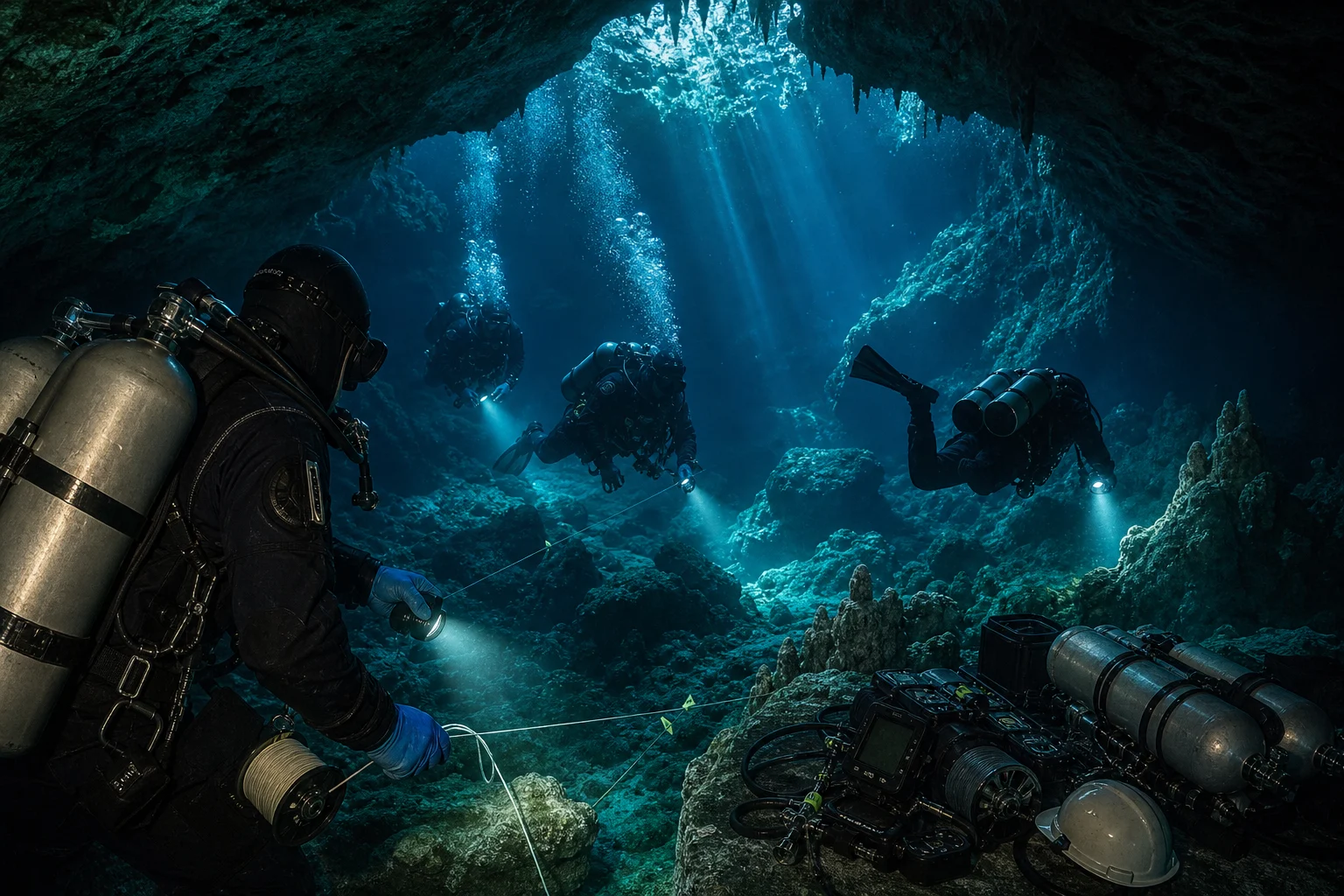
Post-mortem examinations have identified anoxia—critical oxygen deprivation—as the medical cause of death for the five Italian divers lost in the Dhekunu Kandu cave system in the Maldives on May 14, 2026.
The victims were marine ecologist Monica Montefalcone, Giorgia Sommacal, researcher Muriel Oddenino, Federico Gualtieri and diving instructor Gianluca Benedetti. Benedetti was recovered from the cave’s first chamber, while specialist Finnish technical divers later located the other four together in a deeper passage. Maldivian Coast Guard diver Staff Sergeant Mohamed Mahudhee also died during the search-and-recovery operation.
Italian reporting says the examinations found no traumatic injuries consistent with an animal attack. Toxicological analysis reportedly detected no abnormal substances that would explain incapacitation. Those findings narrow the possibilities, but anoxia describes the terminal mechanism; it does not explain how the team entered, became trapped or failed to leave the cave before exhausting usable breathing gas.
Dhekunu Kandu’s entrance is reported at approximately 50–55 metres, with deeper chambers and a narrow connecting passage descending toward 60–70 metres. The group’s exact route, equipment configuration, breathing mixtures, gas reserves, qualifications and dive plan have not been established in a publicly released final investigation. A working hypothesis is that the divers became disoriented and entered a dead-end passage, but that remains unproven.
Investigators retained underwater cameras, dive computers, cylinders and other electronic evidence. Correlating those records may establish the timeline, depth profile, gas usage, team movements and whether equipment or environmental factors contributed. Italian prosecutors are examining possible negligent homicide, while Maldivian authorities have investigated permit and operator questions. No individual fault has been established.
The broad safety lesson is not simply ‘carry more gas.’ Deep cave diving requires environment-specific training, continuous guideline procedures, redundant life-support systems, a conservative gas plan that preserves exit and emergency reserves, clear team roles and a realistic recovery plan. Surface support and rescue teams must also avoid compounding casualties in an environment beyond ordinary recreational diving.
Until device downloads and the investigative record are available, the tragedy should not be reduced to a single speculative initiating event. The defensible conclusion is that the divers died after remaining underwater without sufficient usable breathing gas; why that happened remains unresolved.
Reporting record