NBM Dive Site Resource
Vernon
Two Rivers, Wisconsin, United States
TECHNICAL DIVE ONLY — Wooden package-freighter steamer wreck near Two Rivers at technical-diving depth.
Save this dive site to your free member profile.
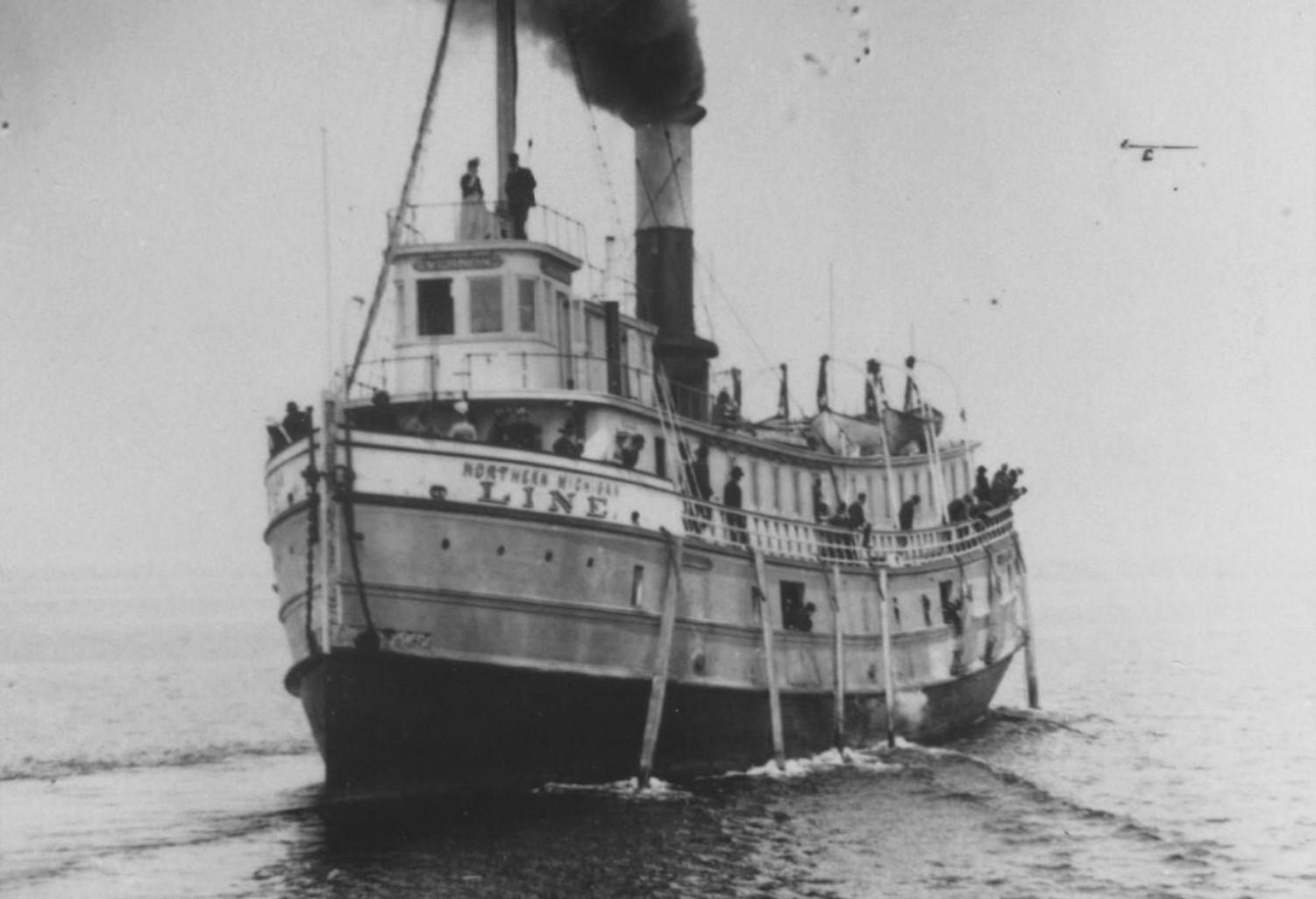
Historic Photograph
Aquatic life at this dive site
What divers may encounter
Three reviewed connections are featured here. Sightings vary by season, conditions, and chance, so they are never guaranteed.

Lake Trout
Salvelinus namaycushVernon lies upright in approximately 175 to 205 feet of Lake Michigan water. NOAA identifies lake trout in Wisconsin Shipwreck Coast waters and notes that wreck structures provide foraging habitat for predatory fish.
Knepp Timothy, U.S. Fish and Wildlife ServiceOpen Aquatic Life Profile →

Burbot
Lota lotaNOAA reports that burbot often appear at deeper Great Lakes wrecks. Divers may encounter one close to Vernon's intact hull or lakebed, but sightings are never assured.
USFWS Mountain-PrairieOpen Aquatic Life Profile →

Round Goby
Neogobius melanostomusNOAA identifies round goby among Lake Michigan bottom-habitat fishes and as common around Great Lakes hard structure. Look along the lower hull and surrounding bottom.
Peter van der SluijsOpen Aquatic Life Profile →
Site media
Photographs
Three views rotate from the published gallery on each visit.
Contributor media
Dive videos
Three featured video positions are reserved on every profile.Recent field observations
Diver-reported temperatures
Automatically checked observations from dives during the past 14 days. Three reports are visible at a time; scroll for more.A report that passes the automatic checks will appear here with the dive date, diver’s display name, and temperatures at each depth.
Reports are automatically checked for plausible dates, depths, and temperatures. They are observations, not forecasts; confirm conditions before diving.
Seasonal planning reference
Typical monthly conditions
Long-term averages, not a forecast. Actual air and water conditions can change quickly and may vary across the site.Moderate-confidence match — Matched by documented Great Lakes port/area. Air and surface-water values are regional planning averages. No bottom-water line is published because a comparable depth-specific record has not yet been verified.
| Month | Average air | Surface water | Bottom water | Bottom measurement depth |
|---|---|---|---|---|
| Jan | 24.0°F / -4.4°C | 35.2°F / 1.8°C | No reliable record | — |
| Feb | 27.1°F / -2.7°C | 36.6°F / 2.6°C | No reliable record | — |
| Mar | 36.4°F / 2.4°C | 37.8°F / 3.2°C | No reliable record | — |
| Apr | 46.3°F / 7.9°C | 38.3°F / 3.5°C | No reliable record | — |
| May | 57.1°F / 13.9°C | 42.5°F / 5.8°C | No reliable record | — |
| Jun | 67.6°F / 19.8°C | 53.7°F / 12.1°C | No reliable record | — |
| Jul | 73.3°F / 22.9°C | 68.2°F / 20.1°C | No reliable record | — |
| Aug | 72.3°F / 22.4°C | 72.2°F / 22.3°C | No reliable record | — |
| Sep | 65.0°F / 18.3°C | 68.4°F / 20.2°C | No reliable record | — |
| Oct | 53.0°F / 11.7°C | 58.5°F / 14.7°C | No reliable record | — |
| Nov | 40.4°F / 4.7°C | 49.0°F / 9.4°C | No reliable record | — |
| Dec | 29.5°F / -1.4°C | 43.7°F / 6.5°C | No reliable record | — |
Wisconsin State Climatology Office — Milwaukee Climate Data
1991–2020 climate normalsReview source ↗NOAA NCEI Coastal Water Temperature Guide — Station 45007
Historical monthly station averagesReview source ↗Bottom temperature is never inferred from surface temperature. A blank month means no reliable depth-specific average is available. Data reviewed 2026-08-26.
Why divers know this place
Highlights
Deep wooden package freighter with a well-documented Great Lakes sinking history.
Shipwreck-only module
The wreck
This section appears only on shipwreck records and brings the vessel, its loss, present condition, access, and responsible wreck-diving considerations into one place.
- Vessel type
- Wooden passenger and package-freight steamer
- Year built
- 1886
- Year sunk
- 1887
- Vessel length
- 158.7 ft
- Cause of loss
- Storm flooding, October 29, 1887
- Wreck orientation
- Hull leaning to starboard
- Present condition
- Intact hull and cargo; detached superstructure lies nearby.
- Penetration guidance
- Interior spaces are overhead environments. Entry requires appropriate wreck training, equipment and a planned exit; depth alone does not establish suitability.
History and significance
Built by J. P. Smith at Chicago, Vernon emphasized speed for passenger and freight service. A gale overwhelmed it east of Rawley Point; flooding extinguished the boiler fires. Only one person survived, and the total aboard remains uncertain. Wisconsin's historical account dates the sinking to October 29, rather than the October 25 date on the operator page.
Plan the trip
Dive boats that visit this wreck
Regional context
Located within
Before you arrive
Access notes
Boat-access sanctuary site; verify current mooring and charter availability.
Plan within your training
Conditions and hazards
Cold water, technical depth, substantial decompression obligation, entanglement and overhead hazards. Depth creates decompression obligations; cold water, darkness or limited visibility, entanglement and overhead wreckage require site-specific technical planning.
Independent resource notice
This record is a starting point for independent verification. Access, closures, moorings, weather, currents, depth, visibility, operator availability, and site conditions can change without notice. Confirm current information with the responsible operator, property owner, managing authority, or another qualified local source before planning or attempting a dive.