NBM Dive Site Resource
Furnas do Monte da Guia
Horta, Autonomous Region of the Azores, Portugal
UNVERIFIED — The official Azores dive registry identifies Furnas do Monte da Guia as a current coastal/cave dive, with an average depth of 24m and a published maximum of 30m. Conditions, route and access must be reconfirmed locally.
Save this dive site to your free member profile.
Historic Picture Placeholder
Aquatic life at this dive site
What divers may encounter
Three reviewed connections are featured here. Sightings vary by season, conditions, and chance, so they are never guaranteed.
Aquatic life research in progress
NBM is reviewing a likely local species for this position.
Aquatic life research in progress
NBM is reviewing a likely local species for this position.
Aquatic life research in progress
NBM is reviewing a likely local species for this position.
Site media
Photographs
Three views rotate from the published gallery on each visit.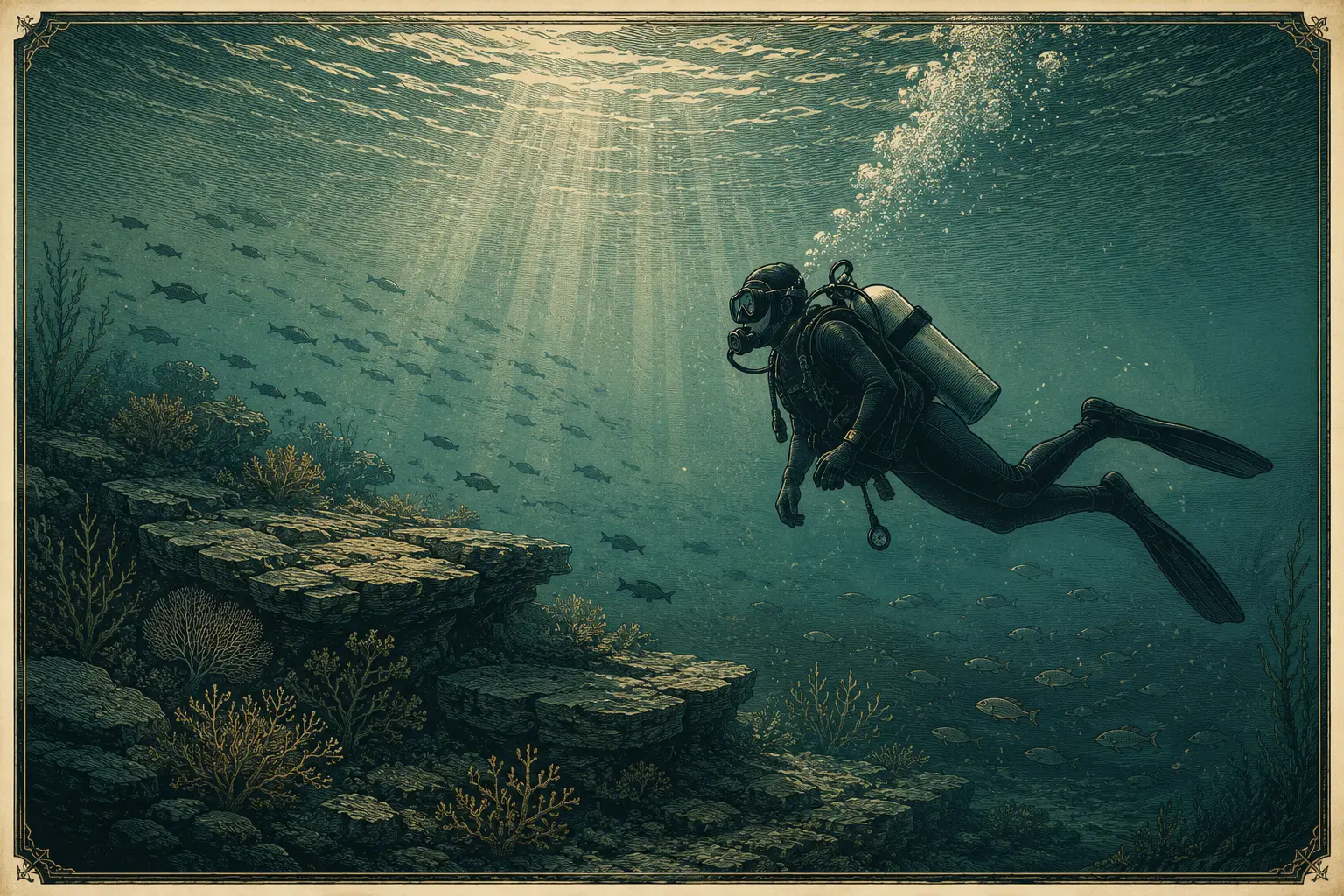
Contributor media
Dive videos
Three featured video positions are reserved on every profile.Published reference location
Location map
The marker shows the public coordinates associated with this profile. Confirm current access, moorings, and departure details before the dive.Map data © OpenStreetMap contributors
Recent field observations
Diver-reported temperatures
Automatically checked observations from dives during the past 14 days. Three reports are visible at a time; scroll for more.A report that passes the automatic checks will appear here with the dive date, diver’s display name, and temperatures at each depth.
Reports are automatically checked for plausible dates, depths, and temperatures. They are observations, not forecasts; confirm conditions before diving.
Why divers know this place
Highlights
Located on the slope of the Guia Hill, these two very large caverns lie only 50 metres from each other, both at a depth of 20 metres. This dive is only advisable for experienced divers certified to dive in caves, but if that is the case then given the proximity between the two caverns it is possible to visit both during a single dive. You can even stop to visit a small shipwreck between the two. The entrance to the cave lies at 20 metres, followed by a long corridor that is less than 2 metres wide and ends in a large chamber. There are stunning backlight effects inside the dark cavern and the walls are colourful, with various species of starfish, nudibranchs, European fan worms (Sabella spallanzanii) and narwal shrimp (Plesionika narval).
Before you arrive
Access notes
Boat 10 min from the Horta Harbour. Access is operator-, permit- and weather-dependent. The displayed coordinates are rounded locality points only—not an entry, launch, marina pickup, mooring, reef top, wreck position, cave entrance, descent point or navigation waypoint.
Plan within your training
Conditions and hazards
Open-Atlantic swell, changing visibility, surge and surface traffic are possible. Dive only with a current local operator and abort when conditions exceed training or the briefing. Moderate to strong current is documented; use appropriate drift/current procedures, surface signalling, live-boat support and conservative gas planning. Deeper routes require certification, gas planning, ascent discipline and decompression awareness; do not exceed personal or agency limits. Any overhead entry requires appropriate cavern/cave training, redundant gas and lights, a continuous guideline and an operator-approved plan; otherwise remain in open water.
At the site
Facilities and support
Use a licensed local dive center. Confirm transport, rental equipment, gas availability, emergency oxygen, communications, recall procedures, environmental restrictions and the current hyperbaric/emergency plan before departure.
Independent resource notice
This record is a starting point for independent verification. Access, closures, moorings, weather, currents, depth, visibility, operator availability, and site conditions can change without notice. Confirm current information with the responsible operator, property owner, managing authority, or another qualified local source before planning or attempting a dive.